
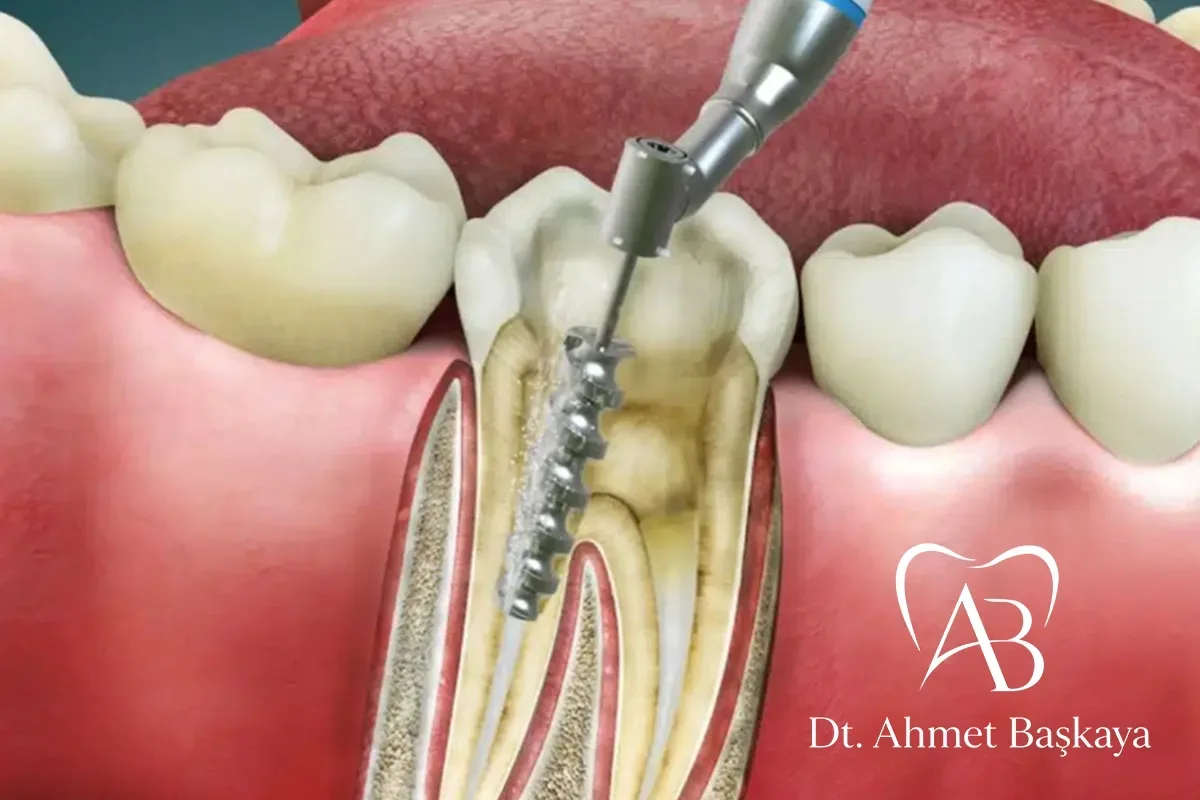
Root Canal Treatment
Root canal treatment is an important dental procedure performed when the nerve and blood vessel tissue inside a tooth becomes infected or damaged, with the goal of preserving the tooth in the mouth without extracting it. Deep cavities, trauma, cracks, or advanced infections can damage the tooth’s living tissue. In such cases, root canal treatment can provide an effective solution to control pain and allow the tooth to continue functioning.
For patients seeking root canal treatment in Bursa, an accurate diagnosis and a personalized treatment plan are of the utmost importance. This is because each tooth’s root structure, infection level, and restoration needs may vary. At Vita Dental Clinic, Dr. Ahmet Başkaya evaluates the patient’s symptoms, X-ray findings, and the tooth’s overall condition to develop an appropriate endodontic treatment plan.
In this article, we will address frequently asked questions—such as what root canal treatment is, how it is performed, how many stages the treatment process consists of, what factors influence root canal treatment costs, and what precautions should be taken after the procedure—in a patient-centered and easy-to-understand manner.
What Is Root Canal Treatment?
Root canal treatment is a dental procedure performed when the nerve and blood vessel tissue inside the tooth becomes infected, inflamed, or damaged. This inner part of the tooth is called the pulp and can be damaged by deep cavities, trauma, cracks, or advanced infections. In such cases, the goal is to preserve the tooth in the mouth by removing the infected tissue rather than extracting it.
In this procedure—also known as root canal treatment or endodontic treatment—the infected nerve tissue inside the tooth is removed, the root canals are shaped and disinfected using specialized techniques, and then sealed with a root canal filling. This prevents the infection from spreading while aiming to preserve the tooth’s chewing function. When properly planned, root canal treatment is a preventive approach that helps avoid tooth loss.
For patients in Bursa seeking root canal treatment, a personalized evaluation of the treatment is essential. At Vita Dental Clinic, Dr. Ahmet Başkaya develops an appropriate treatment plan by evaluating the patient’s pain symptoms, the extent of the tooth’s infection, X-ray findings, and the need for restoration. This ensures that the root canal treatment process proceeds in a safer, more comfortable manner and supports the long-term preservation of the tooth.
When Is Root Canal Treatment Necessary?
Root canal treatment is generally necessary when the nerve tissue inside the tooth becomes infected or damaged. Severe toothache, prolonged sensitivity to hot and cold, pain that worsens especially at night, discoloration of the tooth, an abscess, swelling of the gums, or sensitivity while chewing may be among the signs indicating the need for root canal treatment. These symptoms may indicate a problem that has progressed not only to the surface of the tooth but also into the root canals.
Deep cavities can eventually reach the tooth’s nerve tissue and cause infection. In addition, blows to the tooth, cracked or broken teeth, or cavities developing under old fillings may also require root canal treatment. In such cases, if the infection is left untreated, the pain may worsen, an abscess may form, and the tooth may need to be extracted. The goal of root canal treatment is to help preserve the tooth by removing the infected tissue.
It is not correct for patients to decide whether root canal treatment is necessary based solely on the level of pain. While pain may be very pronounced in some infected teeth, in other cases the symptoms may progress more mildly. Therefore, a detailed dental examination and X-ray evaluation are required for a definitive diagnosis. At Vita Dental Clinic in Bursa, Dr. Ahmet Başkaya determines the appropriate treatment plan by evaluating the patient’s symptoms and the condition of the tooth together.
How Is Root Canal Treatment Performed?
Root canal treatment begins with a detailed dental examination and X-ray evaluation. During this stage, the tooth’s root structure, the extent of the infection, the number of canals, and the condition of the surrounding tissues are examined. Once eligibility for treatment is confirmed, the procedure is typically performed under local anesthesia. This allows the patient to undergo a more comfortable treatment process without feeling pain during the procedure.
During the treatment, the interior of the tooth is accessed, and the infected nerve and blood vessel tissue is removed. In this stage—commonly known as “nerve removal”—the root canals are shaped and disinfected using specialized instruments. The cleaned canals are then filled with special root canal filling materials to prevent reinfection. This step is one of the most critical stages of the root canal treatment process.
In the final stage, the tooth’s crown is restored. Depending on the condition of the tooth, a permanent filling may be placed, or a crown may be planned for teeth with significant tooth structure loss. The goal is to support the chewing function of the tooth that has undergone root canal treatment and to ensure its long-term preservation. At Vita Dental Clinic in Bursa, Dr. Ahmet Başkaya evaluates the tooth’s structure and treatment needs to create a restoration plan tailored to the patient.
What Are the Stages of Root Canal Treatment?
The stages of root canal treatment consist of a process planned according to the condition of the tooth and aimed at removing infected tissues. First, the patient’s complaints are listened to, a detailed oral examination is performed, and the tooth’s root structure is evaluated using X-rays. Once the diagnosis is confirmed, local anesthesia is administered, and the infected nerve tissue is removed by accessing the interior of the tooth.
Once the root canal cleaning is complete, the root canals are shaped using specialized instruments and disinfected. The canals are then filled with special root canal filling materials to prevent reinfection. In the final stage, the tooth’s crown is restored with a filling; for teeth with significant tooth structure loss, a crown may be planned to ensure long-term durability.
The root canal treatment process may not proceed in the same way for every patient. The number of roots, the structure of the canals, the level of infection, the presence of an abscess, and the overall condition of the tooth can determine whether the treatment will take one session or several. For patients planning root canal treatment in Bursa, Dr. Ahmet Başkaya at Vita Dental Clinic evaluates each case individually to create the most appropriate treatment plan.
Is Root Canal Treatment a Painful Procedure?
Root canal treatment is typically performed under local anesthesia. For this reason, patients usually do not feel any pain during the procedure. Before treatment, the condition of the tooth is assessed, the area to be treated is numbed, and the procedure begins with the patient’s comfort in mind. As a result, root canal treatment may not be as difficult or painful as people think.
In patients experiencing severe tooth pain before treatment, the source of the pain is often the infected nerve tissue inside the tooth. During root canal treatment, this infected tissue is removed, the root canals are disinfected, and the goal is to restore the tooth to healthy function. For this reason, it is expected that pain will gradually subside after treatment and that the patient’s comfort in daily life will improve.
It is important for patients who are anxious about the procedure to share these concerns with their dentist. At Vita Dental Clinic in Bursa, Dr. Ahmet Başkaya aims to provide a more informed and comfortable treatment experience by clearly explaining the process to the patient before root canal treatment. This way, the patient can feel more secure, knowing what to expect during the procedure.
How Long Does Root Canal Treatment Take?
The duration of root canal treatment can vary depending on the condition of the tooth being treated. While the procedure may be shorter for single-rooted front teeth, it may take longer for multi-rooted molars because there are more root canals. For this reason, the root canal treatment process does not proceed the same way for every patient, and the treatment plan is determined based on the tooth’s structure.
Factors affecting the duration of treatment include the severity of the infection, the number of root canals, the presence or absence of an abscess, whether the tooth has been treated previously, and the tooth’s need for restoration. In some teeth, the removal of infected tissue and the placement of the root canal filling can be completed in a single session, while in cases of more advanced infection, additional sessions may be required to monitor healing.
In some cases, root canal treatment can be completed in a single session; in other cases, planning for several sessions may be more appropriate. At Vita Dental Clinic in Bursa, Dr. Ahmet Başkaya determines the treatment duration on a case-by-case basis by evaluating the patient’s X-ray findings, the tooth’s root structure, and the extent of the infection.
Is Pain After Root Canal Treatment Normal?
Pain after root canal treatment may occur, particularly in the form of mild sensitivity or a sensation of pressure while chewing during the first few days. Since infected tissue inside the tooth is removed and the root canals are treated during the procedure, temporary sensitivity in the surrounding tissues is considered normal. This is generally a natural part of the healing process.
Mild pain or sensitivity after treatment can usually be managed with the medications and care instructions recommended by the dentist. During this time, it is important to avoid chewing very hard foods with the treated tooth, maintain good oral hygiene, and keep all follow-up appointments. Avoiding excessive strain on that area until the tooth’s final restoration is complete also supports the healing process.
However, if the pain gradually increases, swelling develops in the gums, throbbing persists for a long time, or severe discomfort is felt while biting, you should consult your dentist. At Vita Dental Clinic in Bursa, Dr. Ahmet Başkaya aims to ensure patients recover comfortably by monitoring pain and the healing process through follow-up appointments after root canal treatment.
How Should Post-Root Canal Care Be Managed?
Post-root canal care is essential to maintain the success of the treatment and support the long-term health of the tooth. In the first few days, you should avoid chewing hard foods with the treated tooth, and you should not put excessive strain on that area, especially until the filling or crown is completed. It is normal to experience mild sensitivity in the tooth; however, the dentist’s recommendations should be followed regularly.
One of the most important points to consider regarding eating after root canal treatment is to avoid eating until the effects of the anesthesia have completely worn off. Eating while the numbness persists can lead to accidentally biting your cheek, lip, or tongue. If a temporary filling has been placed, you should avoid hard, sticky, or crunchy foods for the duration recommended by your dentist to prevent damage to the filling.
In the long term, regular oral hygiene for the tooth that underwent root canal treatment should not be neglected. Teeth should be brushed at least twice a day, dental floss should be used, and dental checkups should not be missed. Additionally, any issues such as teeth clenching, grinding, or discomfort while chewing on the treated tooth must be reported to the dentist immediately. At Vita Dental Clinic in Bursa, Dr. Ahmet Başkaya supports the long-term preservation of the tooth by providing personalized recommendations to his patients during the post-root canal care process.
How Long Does a Tooth with Root Canal Treatment Last?
A tooth that has undergone root canal treatment can last for many years with proper treatment planning, a strong restoration, and regular oral hygiene. The success of the treatment is not limited to the cleaning of the root canals; the strength of the filling or crown placed on the tooth is also crucial for long-term use. For this reason, a restoration suitable for the tooth’s structure must be planned after root canal treatment.
Since the living tissue inside the tooth is removed during root canal treatment, the tooth may become more brittle over time. Especially in teeth with significant tooth structure loss, those weakened by decay, or those requiring extensive filling support, a filling alone may not be sufficient. In such cases, a crown may be recommended to protect the tooth and make it more resistant to chewing forces.
The patient’s attention to oral hygiene, avoiding the uncontrolled chewing of hard foods with the treated tooth, and not missing regular dental checkups positively affect the tooth’s lifespan. At Vita Dental Clinic in Bursa, Dr. Ahmet Başkaya plans the post-treatment restoration and care process on an individualized basis to ensure that a tooth that has undergone root canal treatment remains healthy for a long time.
What Factors Affect the Cost of Root Canal Treatment?
Root canal treatment prices may vary depending on the condition of the tooth to be treated and the scope of the procedure. Key factors affecting the price include the tooth’s position in the mouth, the number of root canals, the severity of the infection, the number of treatment sessions required, and the need for restoration following the procedure. For this reason, an exact price for root canal treatment can only be provided after a detailed examination and X-ray evaluation.
Front teeth, premolars, and molars may differ in terms of their root and canal structure. For example, while front teeth typically have fewer canals, molars may have more than one. A higher number of canals, an advanced infection, or the presence of an abscess in the tooth can affect the root canal treatment process. Additionally, whether a filling or crown is required after treatment can also be a determining factor in the total cost.
It is important for patients researching root canal treatment prices in Bursa not to make decisions based solely on price. An accurate diagnosis, sterile working conditions, careful cleaning of the root canals, proper root canal filling, and high-quality planning of post-treatment restoration are crucial for long-term success. At Vita Dental Clinic, Dr. Ahmet Başkaya creates a personalized treatment plan by thoroughly evaluating the patient’s dental structure and treatment needs.
Why Choose Vita Dental Clinic for Root Canal Treatment in Bursa?
For patients seeking root canal treatment in Bursa, an accurate diagnosis, personalized planning, and a thorough post-treatment follow-up process are of the utmost importance. At Vita Dental Clinic, root canal treatment is planned by taking into account the patient’s symptoms, the level of infection in the tooth, the root structure, and the patient’s overall oral health. This approach ensures that each patient receives endodontic treatment tailored to the specific needs of their tooth, rather than a one-size-fits-all procedure.
Dr. Ahmet Başkaya evaluates the patient’s pain complaints, X-ray findings, the tooth’s infection status, and the need for restoration together during the root canal treatment process. Before treatment, the tooth’s salvageability, the number of sessions, the procedures to be performed, and the need for a filling or crown after treatment are clearly explained to the patient. This allows the patient to make a more confident and comfortable decision, knowing exactly what to expect during the treatment process.
At Vita Dental Clinic, patients are provided with detailed information regarding root canal treatment costs, treatment duration, post-procedure sensitivity, care recommendations, and long-term expectations. For patients in Bursa considering root canal treatment, this transparent information process offers a significant advantage in terms of a more comfortable, well-planned, and reassuring treatment experience.
Frequently Asked Questions About Root Canal Treatment
What is root canal treatment?
Root canal treatment is a procedure aimed at preserving the tooth in the mouth by cleaning out the infected or damaged nerve tissue inside the tooth and filling the root canals. This procedure helps prevent tooth extraction and is performed to maintain the tooth’s function.
How is root canal treatment performed?
Root canal treatment begins with an examination and X-ray evaluation. After local anesthesia is administered, the infected tissue is removed, the root canals are disinfected, and they are filled with special root canal filling materials. In the final stage, the tooth is restored with a filling or, if necessary, a crown.
How long does root canal treatment take?
The root canal treatment process can vary depending on the number of roots in the tooth, the severity of the infection, and the treatment plan. While a single session may be sufficient in some cases, several sessions may be required for teeth with more advanced infections or multiple root canals.
What factors affect the cost of root canal treatment?
Root canal treatment costs may vary depending on the location of the tooth being treated, the number of canals, the extent of the infection, the number of sessions, and the need for restorations such as fillings or crowns. A dental examination and X-ray evaluation are required to determine the exact cost.
Is pain normal after root canal treatment?
Pain after root canal treatment may manifest as mild sensitivity for a few days or discomfort while chewing and is generally considered normal. However, if the pain gradually worsens, swelling occurs, or the pain persists for an extended period, you should consult your dentist.