
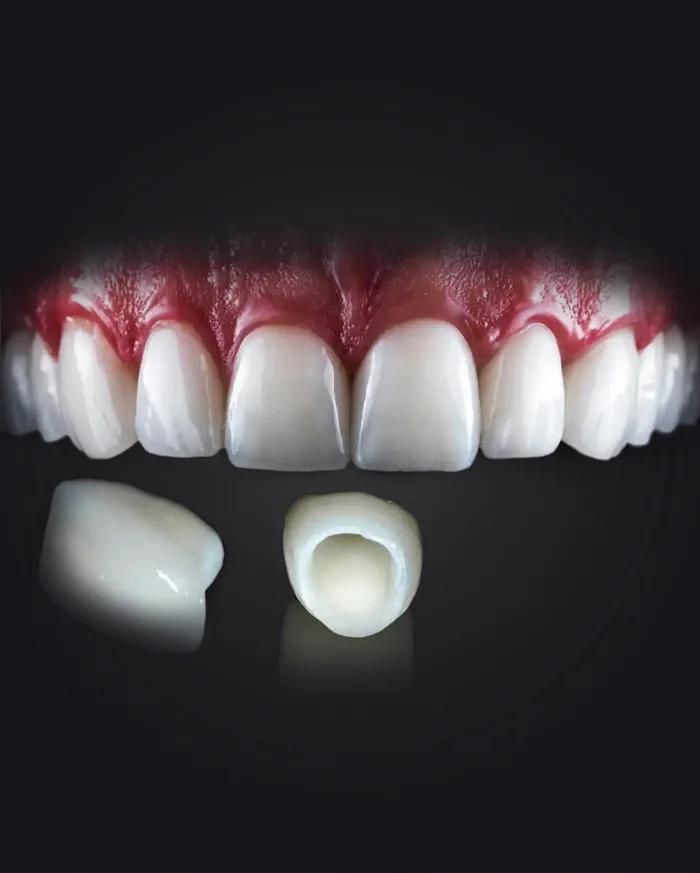
Bursa E-Max Veneer: Features, Application Areas, and Treatment Process
In dentistry, prosthetic treatments aim not only to restore chewing function but also to repair structural and aesthetic losses in tooth alignment. Thanks to advances in dental material technologies, full ceramic systems that offer light transmittance and biocompatibility closest to natural tooth enamel have come to the forefront. Among these systems, E-Max (Erbium Maximum) veneers, which do not contain a metal substructure and feature a reinforced glass ceramic structure, are a medical application frequently preferred especially for restorations of the anterior teeth. For individuals planning E-Max veneer treatment at oral and dental health centers or clinics in Bursa, understanding the medical basis, material properties, and clinical stages of this procedure is highly important for going through an informed treatment process.
What Is an E-Max Veneer and What Materials Is It Made From?
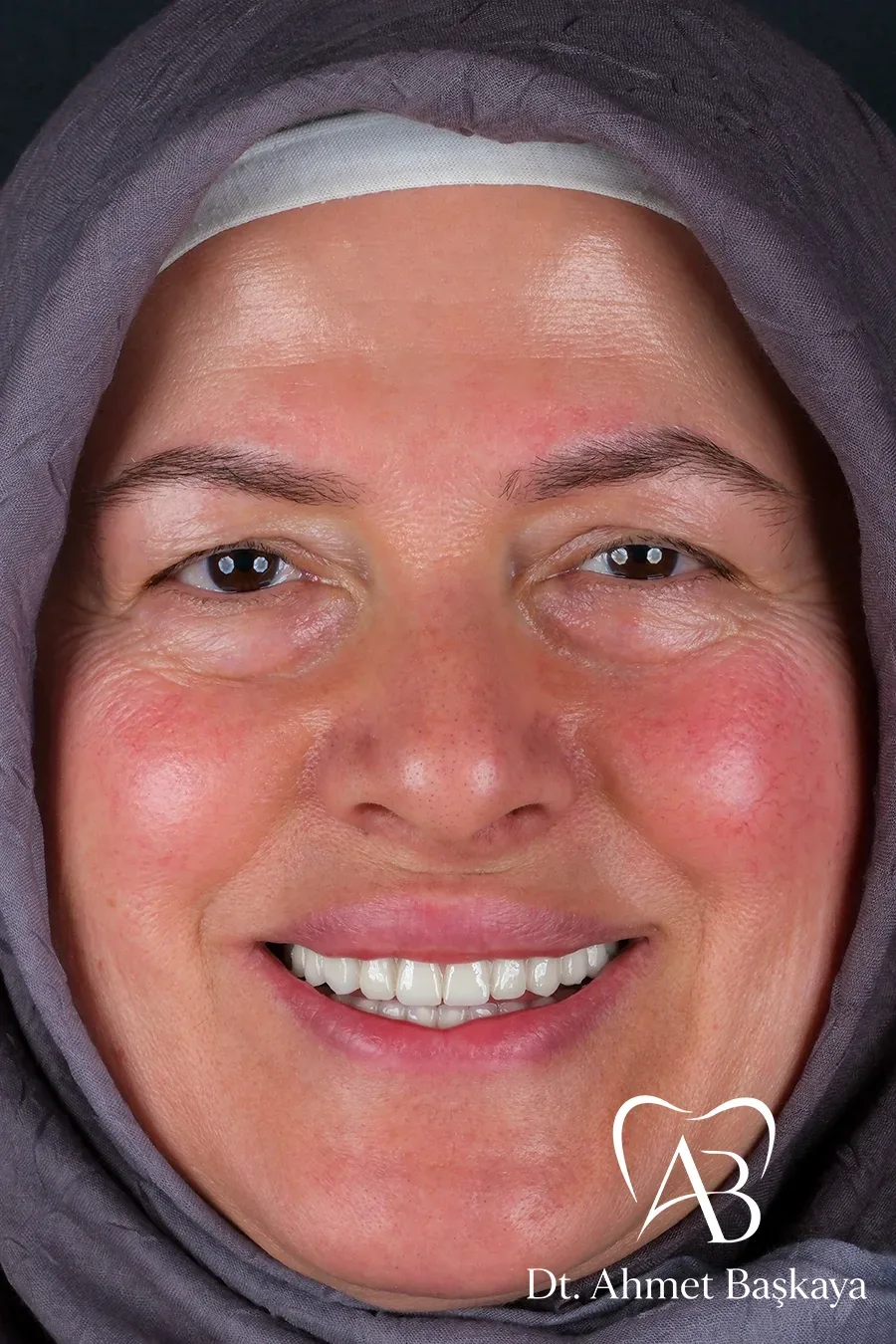
An E-Max veneer is, in essence, a type of dental prosthesis produced from a special glass ceramic formulation called lithium disilicate. Unlike traditional porcelain veneers, this system does not require a gray metal substructure or a more opaque core such as zirconium to provide strength to the tooth. Lithium disilicate crystals are shaped to fit the tooth precisely by being pressed under high heat and pressure in a laboratory setting or milled using computer-aided design/computer-aided manufacturing (CAD/CAM) systems.
The absence of a metal substructure completely eliminates the purplish or grayish color reflections that may appear over time at the gum line. This structural feature allows E-Max veneers to exhibit translucency equivalent to natural tooth enamel, especially on the front incisors.
In What Cases Are E-Max Veneers Applied?
Not every prosthetic material is suitable for every tooth deficiency or damage. For E-Max veneers to be applied, the patient’s clinical condition must be carefully evaluated by the physician. General medical indications include:
Advanced Discolorations: In masking deep structural discolorations in devitalized teeth that darken after root canal treatment, discolorations caused by medications such as tetracycline, and that cannot be resolved with standard tooth whitening (bleaching) procedures.
Closing Diastema (Gapped Teeth): In closing anatomical spaces between the front teeth in cases where the patient does not want orthodontic treatment or orthodontic treatment is not suitable.
Broken and Worn Teeth: In restoring the structural integrity of teeth that have been fractured due to trauma or have significant enamel wear (attrition or erosion).
Shape and Form Irregularities: In making teeth that are developmentally small (microdontia), asymmetric, or misshapen compatible with facial contours.
Medical and Structural Advantages of E-Max Veneers
The main reasons behind the frequent preference for E-Max material in clinical practice are entirely related to the material’s physical and biological characteristics.
High Biocompatibility: Lithium disilicate shows excellent biological compatibility with oral tissues. The risk of causing toxic or allergic reactions is negligible compared with metal-containing alloys. It minimizes the risk of gum recession and provides healthy adaptation in surrounding tissues.
Mechanical Bonding (Adhesion): E-Max veneers are not attached to the tooth with traditional adhesives but with a special chemical bonding method called “adhesive cementation.” This method creates micro-level fusion between the veneer and tooth tissue, making the possibility of the veneer falling off or shifting extremely low.
Low Plaque Retention: The surface of E-Max ceramic is extremely smooth thanks to special polishing firings. This smooth surface makes it difficult for bacterial plaque and tartar to accumulate on the veneer, creating a protective barrier against gum disease and secondary cavities.
Treatment Process: Step-by-Step E-Max Application
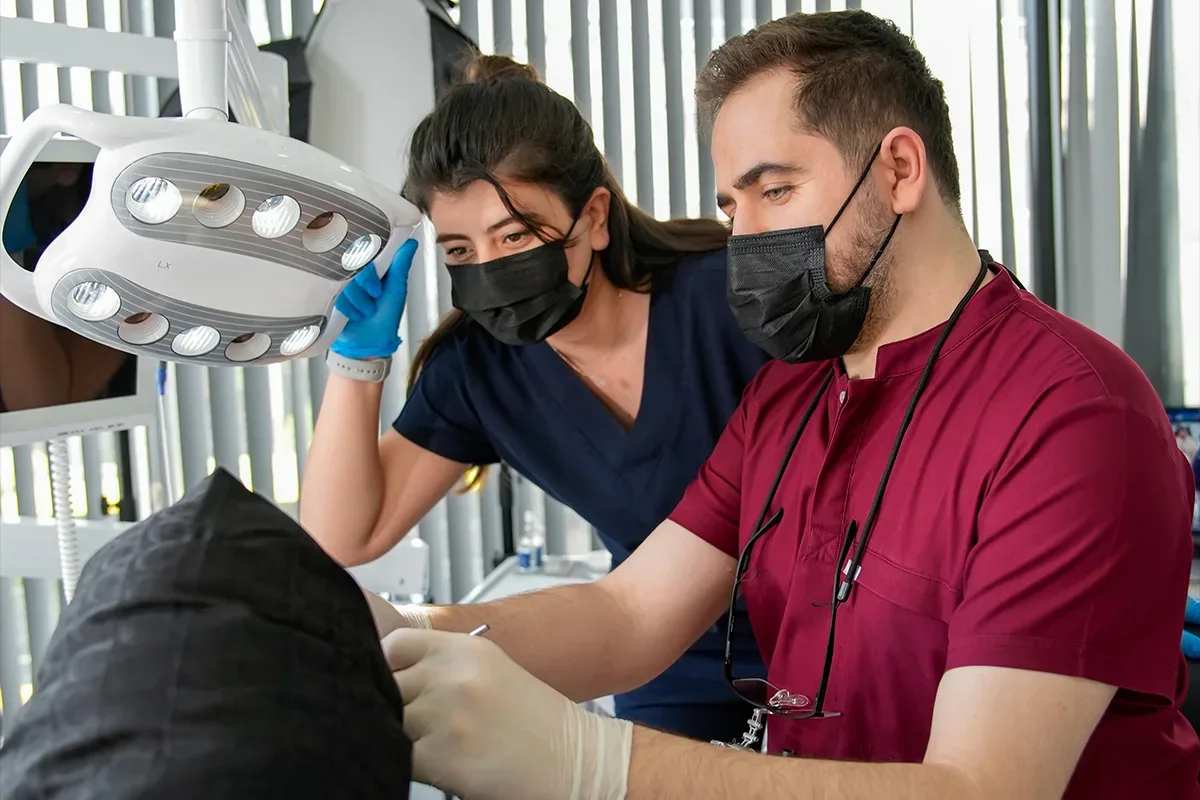
The E-Max veneer procedure carried out by specialist physicians in Bursa is generally a precise and planned medical process consisting of several sessions.
1. Clinical and Radiological Examination
The first stage of treatment is evaluating the health of the oral tissues and tooth roots. When necessary, panoramic X-rays are taken to check the condition of the tooth root tips, bone levels, and gum health. If there is active decay or gingivitis, treatment of these infections is completed first.
2. Tooth Preparation
To ensure the veneer fits the tooth precisely and maintains a natural volume, the enamel is reduced by a millimetric amount (usually between 0.5 mm and 1.5 mm). Since this procedure is performed entirely under local anesthesia, the patient does not feel any pain.
3. Impression Taking and Temporary Teeth
After the reduction process, an anatomical impression of the tooth is taken. In modern dentistry, these impressions can be transferred digitally with intraoral scanners or taken physically with precise silicone impression materials. To prevent sensitivity in the prepared teeth and maintain chewing function, acrylic or composite-based temporary teeth are placed in the same session.
4. Laboratory Stage and Trial Fitting
The impressions taken are examined by dental technicians. Lithium disilicate blocks are processed in the laboratory taking into account the patient’s skin tone, facial shape, lip structure, and age factor. The prepared framework is tried in the patient’s mouth to check shape, bite, and lip support.
5. Permanent Cementation
After all adjustments are completed and the patient’s aesthetic/functional approval is obtained, the E-Max veneers are permanently bonded to the tooth surface using special resin cements. The procedure is completed after final polishing and bite checks.
What Are the Main Differences Between Zirconium and E-Max?
Zirconium and E-Max, which are often confused with each other in dental treatments, are actually two different materials with distinct physical properties.
Zirconium is the oxidized form of a white metallic element. Thanks to its high resistance to compressive forces and fracture, it is especially preferred for posterior molars, areas exposed to intense chewing forces, and bridge prostheses that replace long spans of missing teeth. However, its light transmittance is not as high as E-Max.
E-Max, on the other hand, is entirely glass ceramic. Since its strength is somewhat lower than zirconium, it is used in anterior teeth (incisors and canines), where chewing load is lighter, or in short-span bridges. In contrast, its translucency and enamel-like appearance are much more successful than zirconium. The physician will determine the most appropriate material based on the patient’s bite relationship and the location of the missing tooth.
Oral Care and Protection After Treatment
The clinical lifespan of E-Max veneers depends directly on the patient’s attention to oral hygiene. Although the material is artificial, the underlying tooth tissue and surrounding gum tissue are fully living.
Daily Cleaning: Teeth should be brushed at least twice a day with fluoride toothpaste. Brushing alone is not enough; dental floss and interdental brushes are essential to remove food debris that may accumulate between veneers.
Avoiding Mechanical Trauma: Although glass ceramic structures are strong against pressure, habits that apply reverse force such as cracking hazelnuts or walnuts, opening packages, or biting pens should definitely be avoided, just as with natural teeth.
Teeth Grinding (Bruxism): If the patient has a problem with clenching or grinding teeth during sleep, using protective night guards (occlusal splints) prepared by the physician after treatment is a critical measure to prevent veneers from breaking or cracking.
Routine Checkups: Every six months, a dental visit should be made so that the margins of the veneers, gum health, and overall oral hygiene can be professionally assessed.
Frequently Asked Questions
Is there pain during or after the procedure? Since the tooth reduction (preparation) procedure is performed entirely under local anesthesia, there is no pain during the procedure. After the anesthesia wears off, there may be slight soreness, especially until the temporary teeth are placed, but this can be easily controlled with standard analgesics.
Do E-Max veneers yellow or change color over time? The surface porosity of glass ceramic material is nearly zero. Therefore, coloring agents such as tea, coffee, cigarettes, or red wine cannot penetrate the veneer structure. With proper brushing, the veneers retain their original color for many years.
How many days does the treatment take in total? In standard cases that do not require gum treatment, the period from impression taking to final bonding varies on average between 5 and 7 days depending on laboratory workload. During this period, the patient can continue daily life with temporary teeth.
Legal Notice: This article has been prepared solely to inform the public and raise awareness about oral and dental health, within the framework of the Regulation on Promotional and Informational Activities in Health Services. The information contained herein cannot replace a dentist’s professional examination, diagnosis, or treatment planning. For definitive diagnosis and personalized treatment options regarding prosthetic dental treatments and all other dental procedures, you must consult an authorized oral and dental health institution.