
What Is Zirconium Porcelain? The Secret to a Flawless Smile in Aesthetic Dentistry
In our daily lives, one of the details that stands out most when communicating is undoubtedly our smile. Healthy, white, and properly aligned teeth not only create an aesthetic appearance, but also directly affect a person's self-confidence. In previous years, porcelain restorations with a metal substructure were generally used to repair damaged or aesthetically compromised teeth. However, with advancing medical technologies and rising aesthetic expectations, zirconium porcelain became the shining star of the 2026 dentistry world.
So, what exactly is zirconium porcelain, which dentists confidently recommend to their patients and which combines aesthetics and durability in one? What is the secret behind its close resemblance to natural teeth? In this comprehensive guide, we cover everything you need to know about zirconium restorations on the path to a perfect smile from a professional perspective.
What Is Zirconium Porcelain (Zirconia)?
Zirconium (zirconia) is the form of the naturally occurring zirconium element that has been specially processed and oxidized so it can be used in dentistry, turning it into a white-colored and extremely hard alloy. While classic porcelain restorations have a gray metal layer underneath to provide strength, the substructure of zirconium porcelain restorations consists of a white zirconium alloy.
The most notable feature of this material is that it offers the strength associated with metal while carrying none of metal's disadvantages. Zirconium integrates perfectly with the porcelain layer on top, delivering a result that is both strong enough to withstand chewing forces in the back teeth and aesthetic enough in the front teeth to be indistinguishable from your own natural teeth.
Advantages of Zirconium Dental Crowns Over Traditional Methods
The reason zirconium has almost created a revolution in aesthetic dentistry lies in its countless biological and visual advantages:
1. Unique Light Transmittance and Natural Appearance
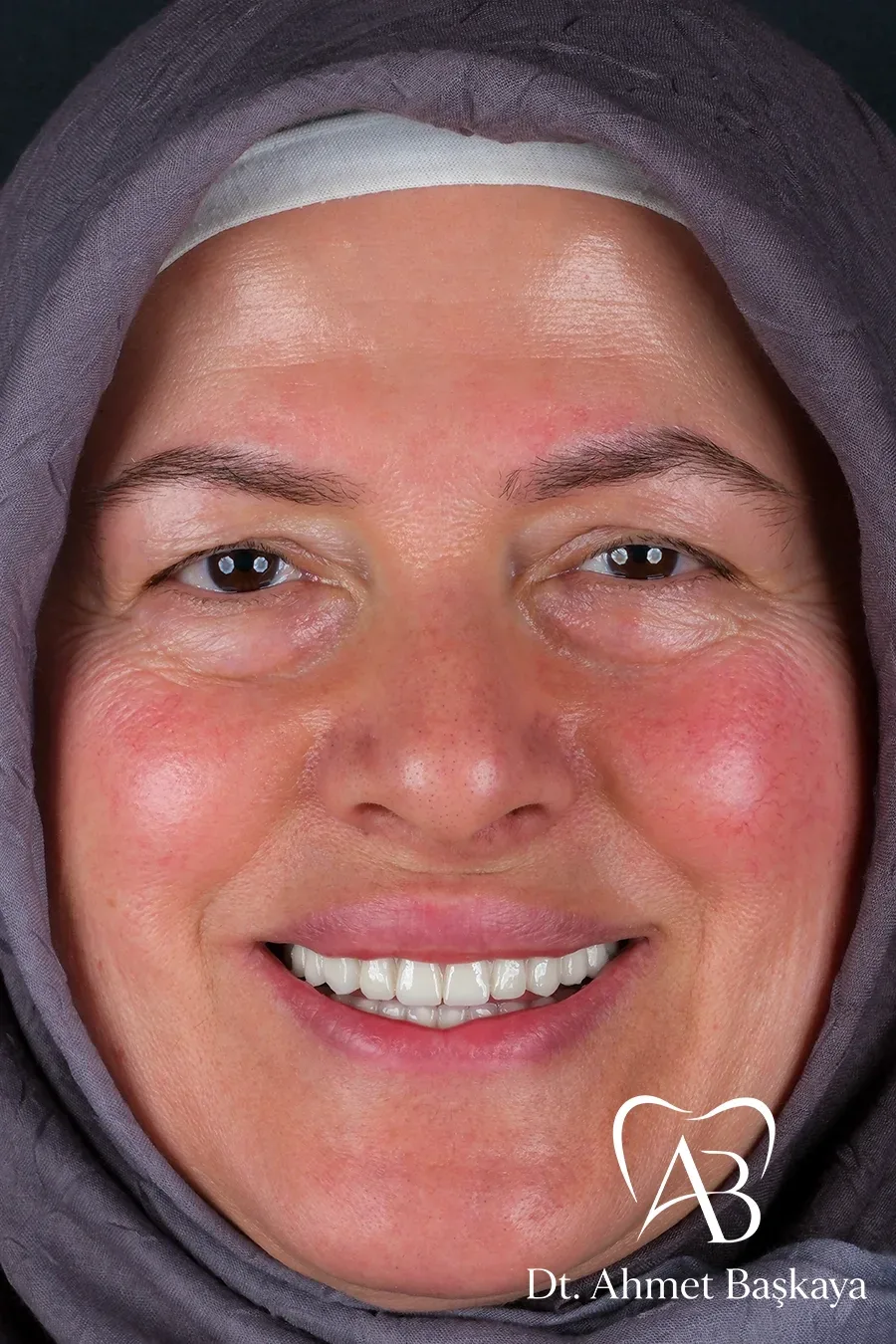
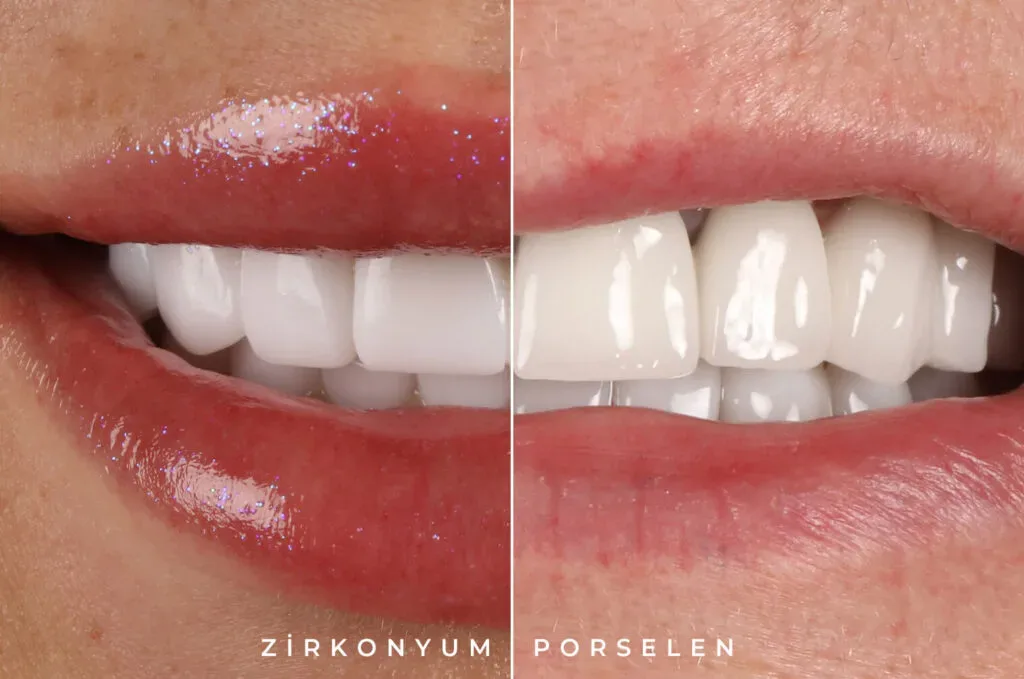
The enamel of a healthy natural tooth does not completely reflect light; it allows a certain amount to pass through. This is called "light transmittance." Older porcelain restorations with metal underneath block light, causing a matte, dull, and artificial appearance (opacity). Zirconium porcelain, however, has light transmittance very close to natural tooth enamel. This creates a vivid and deep appearance, especially in front-tooth aesthetics, completely free from artificiality.
2. Complete Biocompatibility with the Gums (No More Darkening!)
The biggest nightmare of metal-supported restorations is the "gray-black reflection" or discoloration at the gum line that appears over the years as gum recession occurs. Zirconium is a biologically tissue-friendly material (biocompatible). Since it does not contain metal, it definitely does not cause allergic reactions, inflammation, or gray reflections in the gums.
3. High Fracture Resistance and Durability
Besides being aesthetic, zirconium is an extremely durable material used even in industrial applications. In the past, aesthetic restorations (all-ceramic) could only be applied to front teeth, but thanks to the high pressure resistance offered by zirconium, it can be safely and long-term used even in the chewing teeth in the back region (molar teeth).
4. Thermal Insulation and Sensitivity Control
Metal alloys conduct heat very quickly. This can cause tooth sensitivity (aching) in metal-supported restorations when consuming very hot or cold foods. Zirconium has strong thermal insulation properties; because its heat and cold conductivity are very low, patients can eat and drink comfortably after the procedure.
Who Can Get Zirconium Porcelain?
Zirconium has a wide range of uses for both therapeutic and aesthetic purposes:
Those Who Want Smile Design (Hollywood Smile): People who are dissatisfied with the color, shape, or alignment of their teeth and desire an aesthetic transformation.
Those with Severe Discoloration: Patients with permanent intrinsic discoloration caused by antibiotics, fluoride, or age that cannot be resolved with whitening (bleaching) procedures.
Those with Gapped (Diastema) Teeth: People who do not want orthodontic treatment (braces) and want the gaps between their teeth to be aesthetically closed.
Teeth with Significant Fracture and Tissue Loss: Teeth that have suffered excessive tissue loss due to root canal treatment or large cavities and are too weak to be saved with fillings.
Those with Metal Allergies: The safest alternative for individuals who are sensitive or allergic to metal alloys in the mouth.
How Does the Zirconium Crown Process Work with 2026 Technology?
In modern clinics, zirconium porcelain procedures progress quite comfortably and quickly with digital dentistry (CAD/CAM) protocols:
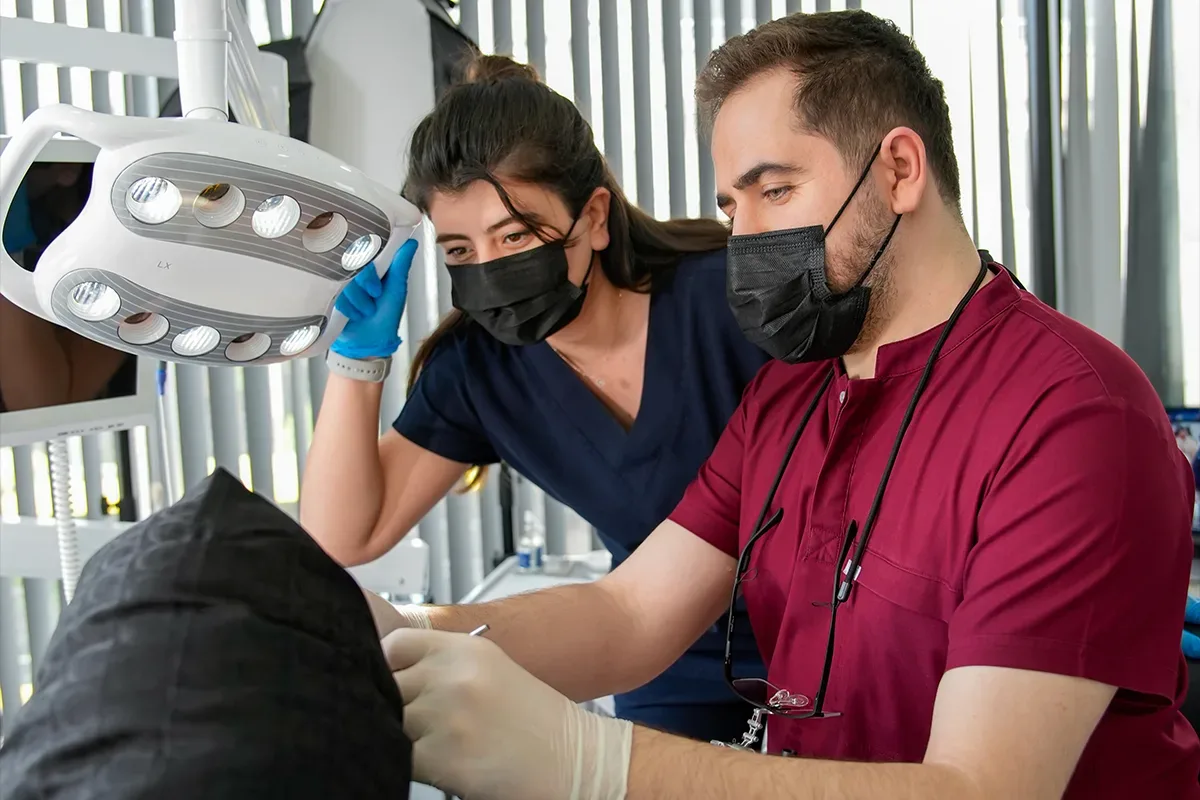
Examination and Digital Planning: In the first stage, the patient's oral measurements are taken with digital scanners (3D scanner). A new smile is designed on the computer according to the patient's facial features, lip structure, and expectations.
Preparation of the Teeth: Under local anesthesia, a minimal reduction (trimming) of 1-2 millimeters is performed around the teeth according to the targeted restoration thickness. The procedure is completely painless.
Placement of Temporary Teeth: Immediately after the teeth are trimmed, temporary teeth are placed on the patient the same day so that there is no sensitivity and the aesthetic appearance is not disturbed. The patient does not leave the clinic without teeth.
Laboratory and Production: The digital measurements are transferred to CAD/CAM devices. Zirconium blocks are milled with computer-assisted robotic cutters at millimetric precision to create a custom substructure for the patient. Porcelain is then crafted on top by expert ceramists in the form of natural teeth.
Try-In and Permanent Bonding: The prepared zirconium porcelains are tried in the patient's mouth. After color, fit, and bite are checked, they are permanently fixed to the teeth with special medical adhesives. This entire process is usually completed within 5 to 7 days.
How Long Do Zirconium Porcelain Restorations Last and How Should They Be Maintained?
One of the issues patients are most curious about is how long this investment will last. With proper oral care, zirconium porcelain restorations can be used trouble-free for 15 to 20 years, and even for a lifetime. Thanks to the material's smooth surface, it does not yellow like natural teeth due to factors such as tea, coffee, or smoking, and it always retains its color.
However, the fact that zirconium does not decay does not mean that the tooth root underneath or your gums will not be damaged. For long-lasting use:
Teeth should be brushed twice a day with the correct technique,
Floss or a water flosser should be used to prevent food accumulation in the areas where zirconium teeth meet the gums,
Cracking hard-shelled nuts with your teeth should be avoided,
Routine dental check-ups twice a year should not be neglected.
Conclusion
Combining aesthetics, biocompatibility, and durability, zirconium porcelain restorations are one of the greatest advantages modern dentistry has to offer. If you are tired of hiding your smile and want to look in the mirror and see natural, healthy, and snow-white teeth that are entirely your own, zirconium crowns will be the most accurate and modern solution for you.