
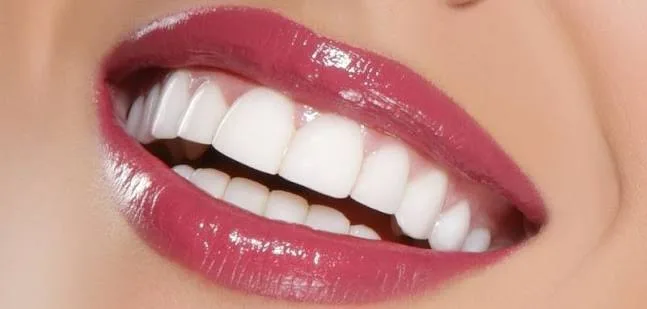
Title: Bursa Hollywood Smile: Holistic Smile Design in Aesthetic Dentistry
Today, dentistry focuses not only on restoring chewing function or phonetics, but also on providing the aesthetic appearance most suitable for an individual’s facial anatomy. The smile design concept, popularly known as the "Hollywood Smile," is a holistic approach in which the teeth, gums, and lips are in harmony with one another. If you are planning a treatment process to meet your aesthetic expectations and are looking for scientific, objective, and detailed information about the medical basis of Bursa Hollywood smile applications, this guide will explain all stages of the process for you.
This article has been prepared in full compliance with health services information regulations and ethical rules in order to inform the public about aesthetic dentistry practices.
What Is a Hollywood Smile (Smile Design)?
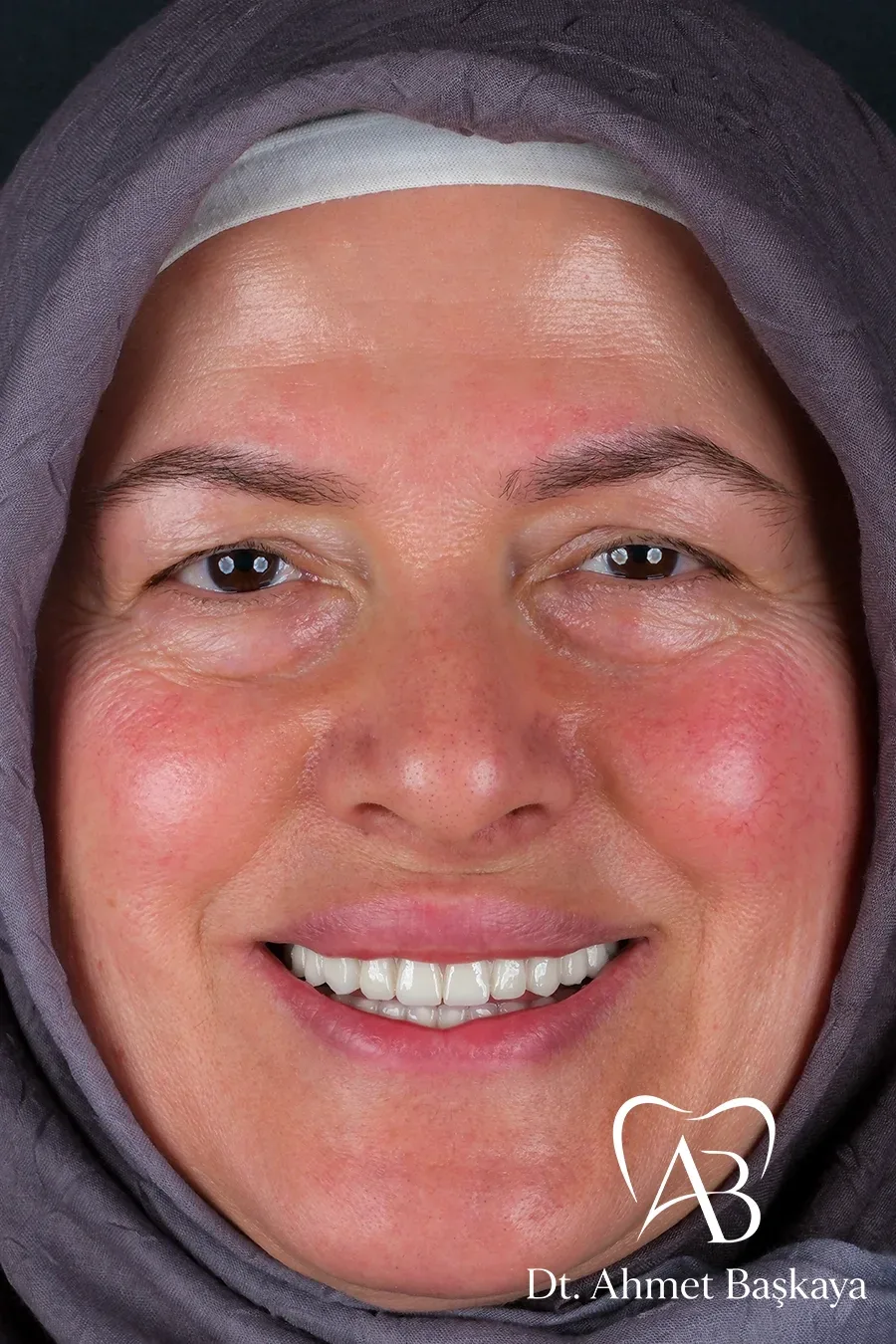
A Hollywood smile is not the name of a single treatment method; it is the process of creating a personalized aesthetic harmony by bringing together different dental disciplines. Its aim is not merely to achieve "white" teeth, but to design the most natural-looking smile that best suits the patient's facial features, lip thickness, skin tone, and even age.
Two basic concepts stand out in an aesthetic smile:
White Aesthetics: This covers the size, shape, alignment, surface texture, and color of the teeth.
Pink Aesthetics: This refers to the level, symmetry, color, and healthy appearance of the gums.
A proper smile design is achieved through the perfect balance of white and pink aesthetics. Even if crooked teeth are corrected, an asymmetric gum line will disrupt the overall aesthetic harmony.
What Are the Main Criteria That Determine Smile Design?
In design processes carried out in clinics in Bursa, dentists take the golden ratio rules and the patient's physical characteristics into account in order to personalize the treatment. The key criteria for a successful plan are as follows:
Facial Shape: An individual's face may be oval, square, round, or long. For example, in a patient with a long face, designing the width of the teeth slightly wider will make the face look more balanced, while in a patient with a round face, slightly lengthening the tooth height will make the face look thinner.
Skin Tone and Age: Very white teeth do not look natural on every skin tone. As age advances, wear occurs in the natural structure of the teeth; choosing an age-appropriate shape and color prevents an artificial (prosthetic) appearance.
Smile Line and Lip Dynamics: The curve formed by the lips when the patient smiles should be parallel to the incisal edges of the upper teeth. In addition, the amount of upper teeth visible during speech is a sign of youth and vitality.
Which Treatments Are Applied in the Bursa Hollywood Smile Process?
Not everyone receives the same procedures in smile design. Depending on the patient's intraoral condition, one or more of the following treatments are combined in the process:
1. Porcelain Veneers (Laminate Veneers / Veneers)
These are very thin ceramic shells applied by removing a very small amount of material (0.3 - 0.7 mm) only from the outer (lip-facing) surfaces of the front teeth, or in some cases without any removal at all. Because their light transmittance is very close to natural enamel, they are the most commonly used method in aesthetic dentistry. Shape irregularities, mild crowding, and permanent discoloration can be addressed with this method.
2. Zirconium and E-Max Full Ceramic Crowns
These are preferred in cases where there is significant tooth substance loss, fractures, or missing teeth. Unlike laminate veneers, they encase the tooth all the way around. E-Max offers a solution in the anterior region with its high translucency, while zirconium provides an aesthetic solution in both anterior and posterior regions thanks to its durability and tissue compatibility.
3. Pink Aesthetics (Gingivectomy / Gum Contouring)
If the gums are excessively visible when the patient smiles (Gummy Smile) or if the gum levels are asymmetric, the gums are contoured to the millimeter using laser or electrocautery devices. The tooth lengths are extended and symmetry is achieved.
4. Teeth Whitening (Bleaching)
If the patient's tooth shape and alignment are aesthetically satisfactory, the desired smile can be achieved simply by lightening the tooth color by several shades with office-type whitening gels applied under the supervision of a dentist.
5. Clear Aligner Treatment (Orthodontics)
If there are severe alignment problems (crowding) in the teeth, instead of cutting the teeth and placing crowns, the teeth are first corrected with the help of clear aligners using a bio-preservative approach. If necessary, minor aesthetic touches (composite bonding) are then performed on the corrected teeth.
Clinical Application: Stages of Digital Smile Design
In modern dentistry, the process is now fully supported by digital tools. A standard Bursa Hollywood smile treatment consists of the following stages:
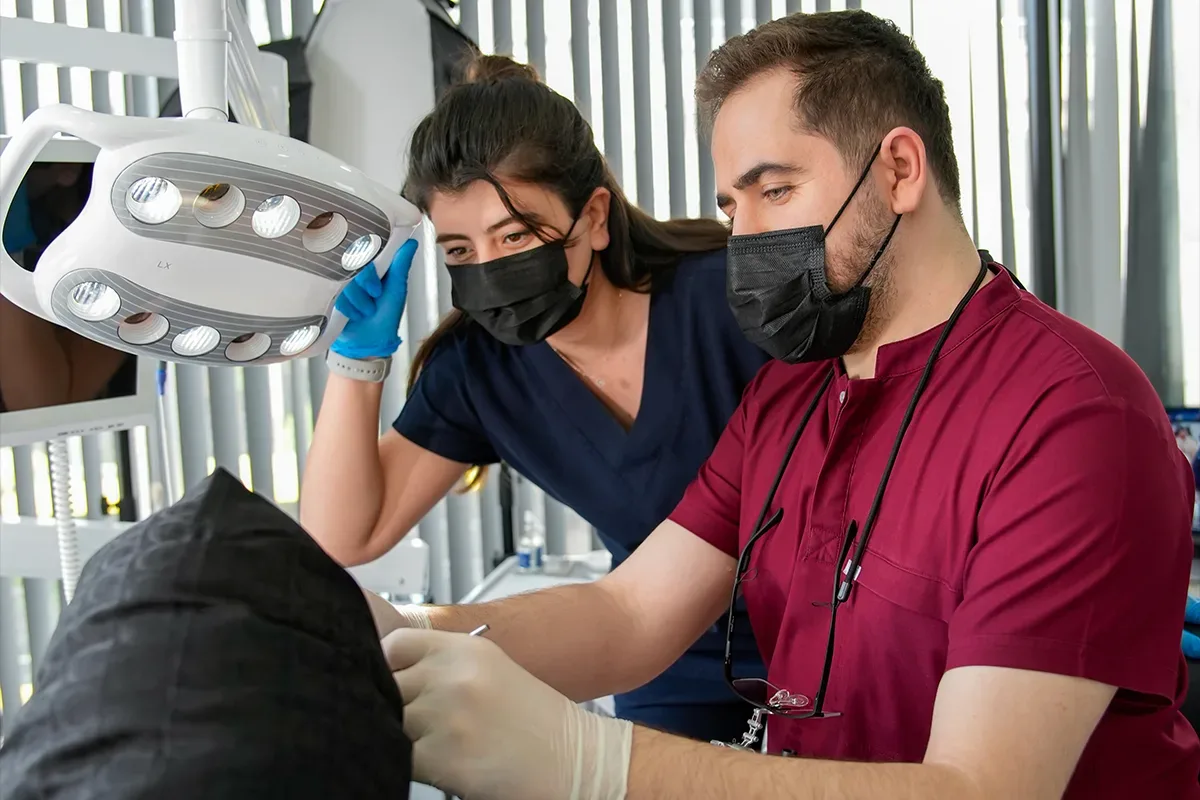
1. Data Collection and Digital Scanning At the first appointment, the patient's oral cavity is scanned three-dimensionally using digital scanner cameras (CAD/CAM systems). Then, smile and profile photos of the patient are taken from different angles with a clinical camera. Sometimes video recordings are taken to examine lip movements during speech as well.
2. Design and Mock-up (Preview) Application The collected data are transferred to special design software in a computer environment. The tooth form most suitable for the patient's face is digitally designed. The greatest advantage of this stage is the "Mock-up" (temporary model) application. A precise replica of the digitally designed teeth is placed in the patient's mouth using a temporary material. In other words, the patient can see the finished treatment in the mirror before any cutting or procedure is performed on their own teeth. At this stage, the dentist and the patient jointly decide on the form and color.
3. Preparation and Impression After approval of the design, the necessary millimetric preparation (roughening or reduction) is performed on the relevant teeth under local anesthesia, and the final impression is sent to the laboratory.
4. Try-In and Permanent Cementation (Bonding) The porcelain or E-Max materials received from the laboratory are tried in the mouth. If the occlusion, phonetics, and aesthetic harmony are complete, the restorations are fixed to the teeth using special dental cements (adhesives).
Maintenance and Lifespan of Aesthetic Restorations
Seramic or laminate materials used in smile design do not change color due to factors such as tea, coffee, or smoking. Their surfaces are as smooth as glass. However, in order for these restorations to remain healthy in the mouth, you must take very good care of your own tooth and gum tissue underneath.
Brushing twice a day with the correct technique and using dental floss are mandatory.
Habits such as nail-biting, chewing pens, or cracking hard-shelled nuts with the front teeth should be avoided.
If nighttime teeth grinding (bruxism) has been diagnosed, a night guard prepared by the dentist must be worn during sleep to prevent porcelain fractures.
Routine dental check-ups should be performed twice a year.
A properly planned smile design, carried out within biological rules while respecting the patient's anatomical structure, adds value to your face and refreshes your self-confidence. An expert clinical evaluation is essential in order to determine the most appropriate treatment route.
Legal Notice and Information
This article has been prepared solely to inform the public about aesthetic dentistry practices, within the framework of the rules of the Law on the Practice of Medicine and Its Branches No. 1219 and the Ministry of Health's Regulation on Promotional and Informational Activities in Health Services. The information contained herein cannot be used in the diagnosis or treatment of diseases and does not serve as a "before/after" promise or commercial direction. In order for the most suitable treatment plan for your oral, dental, and jaw structure to be created, you must consult a dentist directly and undergo an examination.