
Long-Term Implant Success in Diabetes Patients: Blood Sugar Control and Clinical Management
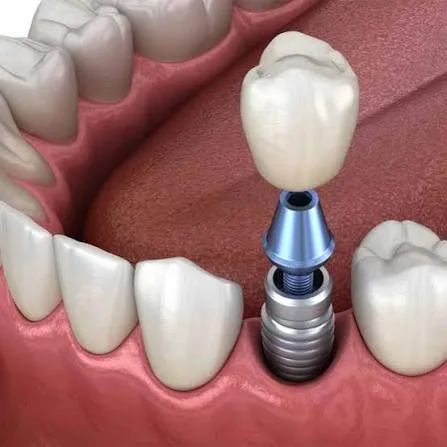
Dental implants, accepted as the gold standard in the treatment of missing teeth, are based on placing titanium screws into the jawbone and building prosthetic teeth (crowns, bridges) on top of these screws. The success of an implant depends on the process of "osseointegration" (bone fusion), in which the titanium surface integrates structurally and functionally with the jawbone. However, diabetes (sugar disease), a systemic disease that directly affects wound healing, blood circulation, and the immune system, is one of the most critical factors that can affect the osseointegration process and the implant's long-term survival. Although it has long been thought that implant placement in diabetes patients is risky or contraindicated (not recommended), current scientific evidence and modern surgical protocols show that implant success in well-controlled diabetes patients is very close to that in healthy individuals. This article examines in detail the physiological effects of diabetes on implant healing, the decisive role of HbA1c levels, possible complications, and the strategies applied in clinical practice to increase long-term success.
The Effects of Diabetes on Osseointegration and Tissue Healing
Diabetes is a condition in which blood sugar (glucose) levels remain chronically high as a result of the pancreas not producing enough insulin (Type 1) or the body not being able to use the insulin it produces effectively (Type 2). Chronic hyperglycemia (high blood sugar) can negatively affect wound healing and bone formation after implant surgery by causing a series of pathophysiological changes at the cellular level. These effects occur mainly through three primary mechanisms:
1. Microvascular Changes and Reduced Blood Flow
Over time, high blood sugar thickens the walls of the body's small blood vessels (capillaries) and reduces their elasticity (microangiopathy). This prevents oxygen, nutrients, and reparative cells that support wound healing from reaching the tissues in sufficient amounts. Optimal blood flow is vital for the healing of bone and soft tissue around the implant; reduced blood flow delays the healing process.
2. Immune System Suppression and Increased Risk of Infection
In diabetic patients, the ability of white blood cells (especially neutrophils and macrophages) to destroy bacteria, migrate to the site of infection (chemotaxis), and engulf foreign substances (phagocytosis) is weakened. This leaves the surgical site vulnerable to infection. A bacterial infection developing in the surgical area can directly block the implant from fusing with the bone, making it one of the most important causes of early implant loss (failure).
3. Impaired Bone Metabolism and Advanced Glycation End Products (AGEs)
In a hyperglycemic environment, excess glucose in the blood binds to proteins and lipids, leading to the formation of toxic substances called "Advanced Glycation End Products" (AGEs). AGEs disrupt collagen structure and suppress the functions of cells responsible for bone formation (osteoblasts), while increasing the activity of cells responsible for bone resorption (osteoclasts). As a result, new bone formation around the implant slows down, bone quality decreases, and bone density (mineralization) is reduced. This imbalance makes it more difficult for the implant to firmly attach to the bone mechanically.
HbA1c (Glycated Hemoglobin): The Key Criterion in Implant Decisions
When deciding on implant treatment in a diabetic patient, fasting blood sugar on the day of surgery alone is not a sufficient indicator, because blood sugar can fluctuate hourly and daily. The most reliable parameter for the implant decision is the HbA1c (Hemoglobin A1c) test, which shows the average blood sugar level over the past 2 to 3 months.
In the dental literature and clinical protocols, HbA1c level is accepted as the most critical threshold directly predicting implant success:
Well-Controlled Diabetes (HbA1c < %7): In this group, wound healing and infection risk are quite similar to those of healthy individuals without diabetes (normoglycemic). Implant surgery can be performed safely, and long-term success rates (generally >%95) are the same as in healthy individuals.
Moderately Controlled Diabetes (HbA1c %7 - %8): In these patients, slight delays in wound healing or a modest increase in complication risk may be seen, but implant treatment can be performed (with necessary precautions and antibiotic prophylaxis). Postoperative follow-up should be closer.
Poorly Controlled (Uncontrolled) Diabetes (HbA1c > %8): In patients above this threshold, the risk of infection, wound dehiscence, bone loss, and implant failure is very high. Implant surgery is considered contraindicated in uncontrolled diabetics. The physician should definitely refer the patient to an internal medicine/endocrinology specialist, and no elective surgical procedure should be performed until blood sugar levels fall to the targeted range (preferably below %7.5).
Implant Complications Seen in Diabetic Patients
In patients whose control is not achieved or who are borderline, there is a risk of encountering various complications in both the early and late periods:
Early Failures (Healing Phase): These occur during the first 3-6 months of the postoperative osseointegration period. The most common reason is infection of the surgical site or the implant not forming any bone around it because high sugar disrupts cellular functions, causing the implant to loosen and come out of place (fibrous tissue encapsulation).
Late Failures (Peri-implantitis): These are problems that arise years after the implant has successfully fused to the bone and the prosthesis has been loaded (the tooth has been made). Diabetic patients have a high tendency toward gum inflammation and bone loss (periodontitis/peri-implantitis). When poor oral hygiene combines with rising blood sugar levels, the bone around the implant begins to resorb rapidly, and as a result, the stable implant may be lost.
Clinical Strategies Applied to Improve Long-Term Success
To bring implant success in diabetic patients to the level seen in healthy individuals and ensure long-term function, specific and meticulous clinical protocols are applied:
1. Comprehensive Preoperative Evaluation
Before surgery, the patient's current HbA1c value is absolutely required. The insulin doses or oral antidiabetic medications the patient uses are evaluated in consultation with an internal medicine specialist. If necessary, adjustments are made to medication timing to suit the surgical stress.
2. Preventive Antibiotic Use
To support the suppressed immune system of diabetes patients and prevent surgical site infections, prescribing protective antibiotics 1 hour before the operation and for several days after the operation is a standard approach. In addition, the oral bacterial load (flora) is minimized before the operation with antimicrobial mouthwashes.
3. Atraumatic (Minimally Invasive) Surgical Techniques
Considering that tissue nutrition (vascularization) may be impaired, surgical procedures are designed to cause as little tissue damage as possible (if possible, with flapless, suture-free methods). If a flap (lifting the gum) is necessary, incisions should be carefully planned to avoid disrupting blood supply, and the operation time should be kept as short as possible.
4. Extending the Healing Period
The waiting (osseointegration) period, which is 2-3 months in the lower jaw and 3-4 months in the upper jaw in healthy individuals, may be extended by a few more months in diabetes patients depending on the situation, due to slower wound healing and bone metabolism. During this period, not loading the implant with a prosthesis and allowing time for the bone to mature is a critical protective measure.
5. Preference for Implants with Improved Surface Characteristics
In modern implant systems, the surface of the titanium screw is equipped with chemical/physical processes designed to attract bone cells and accelerate fusion (for example, sandblasting, acid etching, hydrophilic surfaces). The use of implants with highly hydrophilic (water/blood-loving) surfaces reduces risks in diabetic patients by increasing cellular attachment during the initial healing phase.
6. Close Postoperative Follow-Up and Maintenance Treatment
A successful surgery does not mean the treatment is complete. Diabetes is a systemic condition the patient carries for life. Patients must come for check-ups at least every 6 months and have professional tartar and plaque cleaning (to protect peri-implant tissue health). Excellent oral hygiene must be maintained at home, and most importantly, the patient must continue for life to keep blood sugar levels within the recommended limits (HbA1c <%7).
Conclusion
Diabetes does not constitute an absolute barrier to implant treatment. In light of scientific data, the success of implants in a person diagnosed with diabetes depends not on the diagnosis itself, but on how successfully glycemic control (blood sugar) is managed. In well-controlled diabetes patients whose HbA1c level is kept below %7, who receive systemic follow-up, and who pay a high level of attention to oral hygiene, the long-term survival rates of dental implants are equivalent to those in healthy individuals. In this process, the coordinated work of the dentist, physician, and patient is the key to the safe long-term use of high-quality prostheses.