

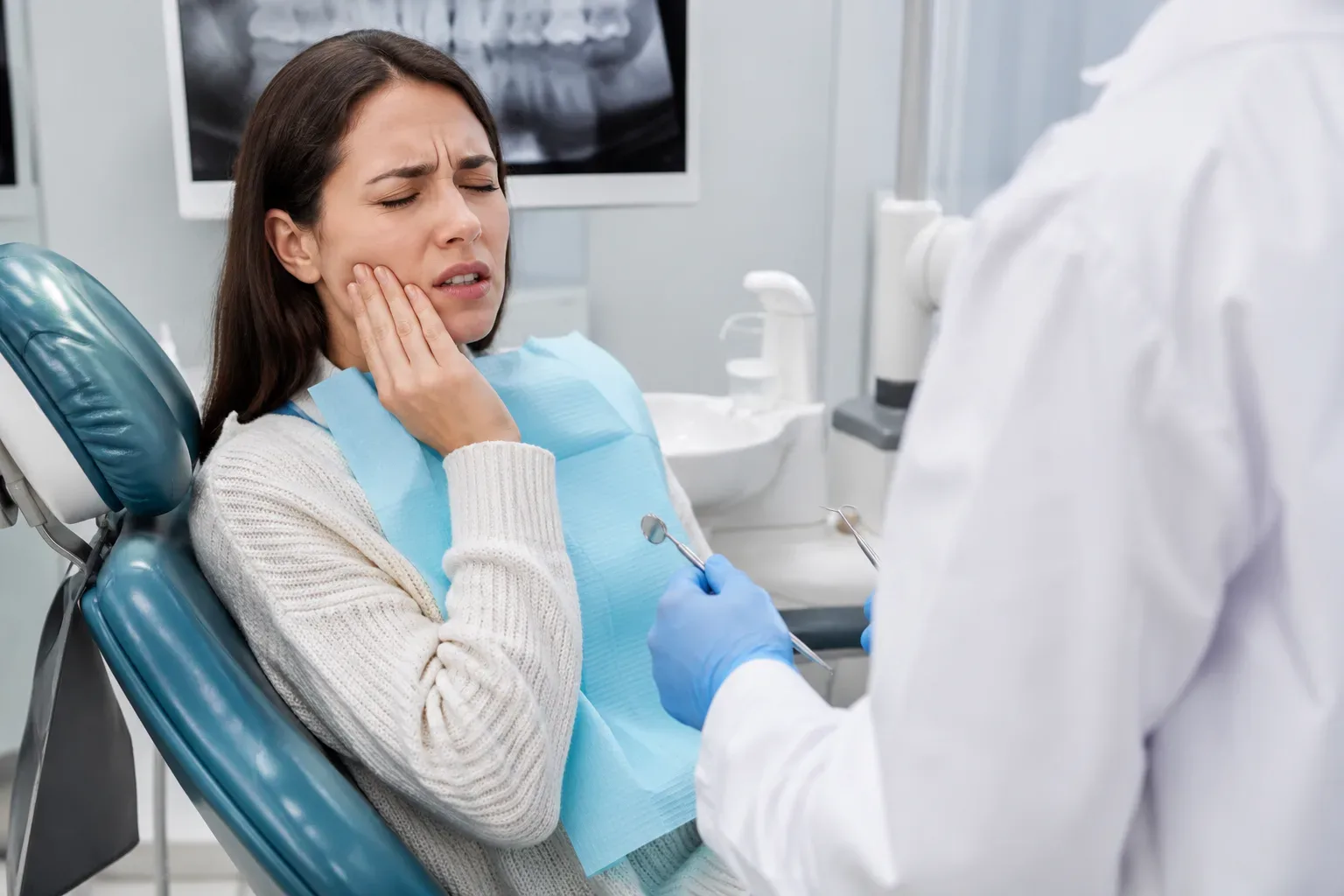
The question “What helps with a toothache?” is one of the most frequently searched topics, especially when it comes to pain that starts suddenly, is throbbing, or worsens at night. Toothache can develop due to various causes, such as cavities, gum inflammation, abscesses, broken teeth, old fillings, wisdom teeth, or teeth grinding. Although the severity and duration of the pain may vary, home remedies usually provide only temporary relief.
For patients searching for home remedies for toothache, maintaining good oral hygiene, rinsing with warm salt water, applying a cold compress to the outside of the cheek, and avoiding chewing on the affected side may provide temporary relief. However, if you experience throbbing tooth pain, swelling in the face or gums, fever, a bad taste in your mouth, or pain severe enough to wake you up at night, the underlying cause must be evaluated by a dentist.
At Vita Dental Clinic, Dr. Ahmet Başkaya evaluates the patient’s pain history, the structure of their teeth and gums, existing fillings, and necessary imaging results to determine the source of the toothache. In this article, we’ll address frequently asked questions in simple terms—such as how to relieve toothache, what to do for pain caused by cavities, inflammation, abscesses, broken teeth, fillings, and wisdom teeth, which home remedies can provide temporary relief, and under what symptoms you should see a dentist without delay.
What Causes Toothache?
Toothache does not result from a single cause. The most common causes include tooth decay, inflammation of the tooth nerve, tooth abscess, gum disease, broken or cracked teeth, old fillings, wisdom tooth problems, and teeth grinding. In some cases, food getting stuck between teeth or sensitivity due to receding gums can also cause pain.
The pain may be throbbing, sharp, constant, or intermittent. Pain triggered by hot, cold, or sweet foods, or during chewing, may indicate that different tissues within the tooth are affected. Pain that worsens at night, starts spontaneously, or spreads to the face may be related to a more serious dental problem.
The type of pain and when it began can provide clues about the underlying problem; however, a dental examination is necessary for a definitive diagnosis. When necessary, the source of the pain is determined through clinical examination and imaging methods. Therefore, rather than simply suppressing the pain, it is important to identify the underlying cause and plan appropriate treatment for the toothache.
What Helps with Toothache?
Safe answers to the question “What helps with toothache?” generally involve temporary relief methods. Keeping the affected area clean, gently removing food stuck between the teeth, and rinsing the mouth with warm salt water may help. Applying a cold compress to the outside of the cheek for short periods can also help reduce pain and swelling.
In appropriate patients, pain relievers may be used in accordance with the package insert or as recommended by a doctor or pharmacist. However, medications, aspirin, alcohol, cologne, or irritating substances should not be applied directly to the affected tooth. Such practices can cause burns and irritation to the oral tissues. It is important to remember that home remedies do not treat the underlying problem, such as a cavity, infection, or abscess.
If a toothache lasts longer than one or two days, is getting worse, or is accompanied by swelling, fever, a bad taste in the mouth, difficulty opening the mouth, or sensitivity when biting, you should see a dentist. If you experience rapidly increasing swelling in the face or neck area along with difficulty breathing or swallowing, you should seek emergency medical evaluation without delay.
What Helps Relieve Toothache at Home?
Patients looking for home remedies for toothache should first focus on maintaining good oral hygiene. Food particles stuck between the teeth can be gently removed using dental floss or an interdental brush without irritating the area. Gently rinsing the mouth with warm salt water and applying a cold compress wrapped in a cloth to the outside of the cheek may provide temporary relief.
Extremely hot, cold, sugary, acidic, or hard foods can increase sensitivity and pain. Therefore, softer foods may be preferred while the pain persists, and chewing on the affected side should be temporarily avoided. Aspirin, cologne, alcohol, or irritating substances should not be applied directly to the affected area.
These methods should be considered only as temporary home remedies for toothache. They do not address the underlying cause of the pain, such as a cavity, tooth nerve inflammation, a cracked tooth, or an abscess. If the pain persists, worsens, or is accompanied by swelling and fever, a dental examination should not be delayed.

Should Pain Relievers Be Used for Toothache at Home?
Pain relievers can help temporarily manage acute toothache. However, these medications do not treat the underlying issues, such as cavities, infections, abscesses, or problems with the dental nerve. Even if the pain subsides with medication, a dental examination is necessary to identify the underlying problem and determine the appropriate treatment for the toothache.
The choice of pain reliever may vary depending on the person’s age, pregnancy or breastfeeding status, other medications they take regularly, and any stomach, kidney, liver, or bleeding issues. For this reason, pain relievers should only be used as directed in the package insert and in accordance with a doctor’s or pharmacist’s recommendation. The recommended dose should not be exceeded, and different medications containing the same active ingredient should not be taken together.
Some over-the-counter pain relievers may provide temporary relief for suitable patients; however, not every medication is safe for everyone. It is especially important to seek professional advice for children, pregnant women, and individuals with chronic illnesses or who take medications regularly. If you experience severe pain, facial swelling, fever, a bad taste in your mouth, or difficulty swallowing or breathing, do not simply wait while taking pain relievers; seek medical attention immediately.
What Helps with Throbbing Toothache?
The question “What helps with throbbing toothache?” is frequently asked, especially when the pain worsens at night or interferes with daily life. Throbbing pain may be associated with conditions such as advanced tooth decay, irritation of the dental nerve, infection around the root, or a dental abscess. If the pain starts on its own, lasts a long time, or spreads to the ear, jaw, or face, it may indicate that deeper tissues of the tooth are affected.
Keeping the affected area clean, gently removing food particles from between the teeth, and applying a cold compress to the outside of the cheek for short periods may provide temporary relief. In appropriate patients, pain relievers may be used according to the package insert or as recommended by a doctor or pharmacist. However, aspirin, cologne, alcohol, or irritating substances should not be applied directly to the affected tooth.
Throbbing tooth pain should not be managed solely with temporary measures. A permanent solution cannot be achieved without determining the cause of the pain. You should see a dentist as soon as possible, especially if you experience swelling, fever, a bad taste in your mouth, difficulty opening your mouth, or significant pain when biting down. If swelling in the face and neck area increases rapidly or if difficulty breathing or swallowing develops, an emergency medical evaluation is required.
What Helps with Toothache Caused by Cavities?
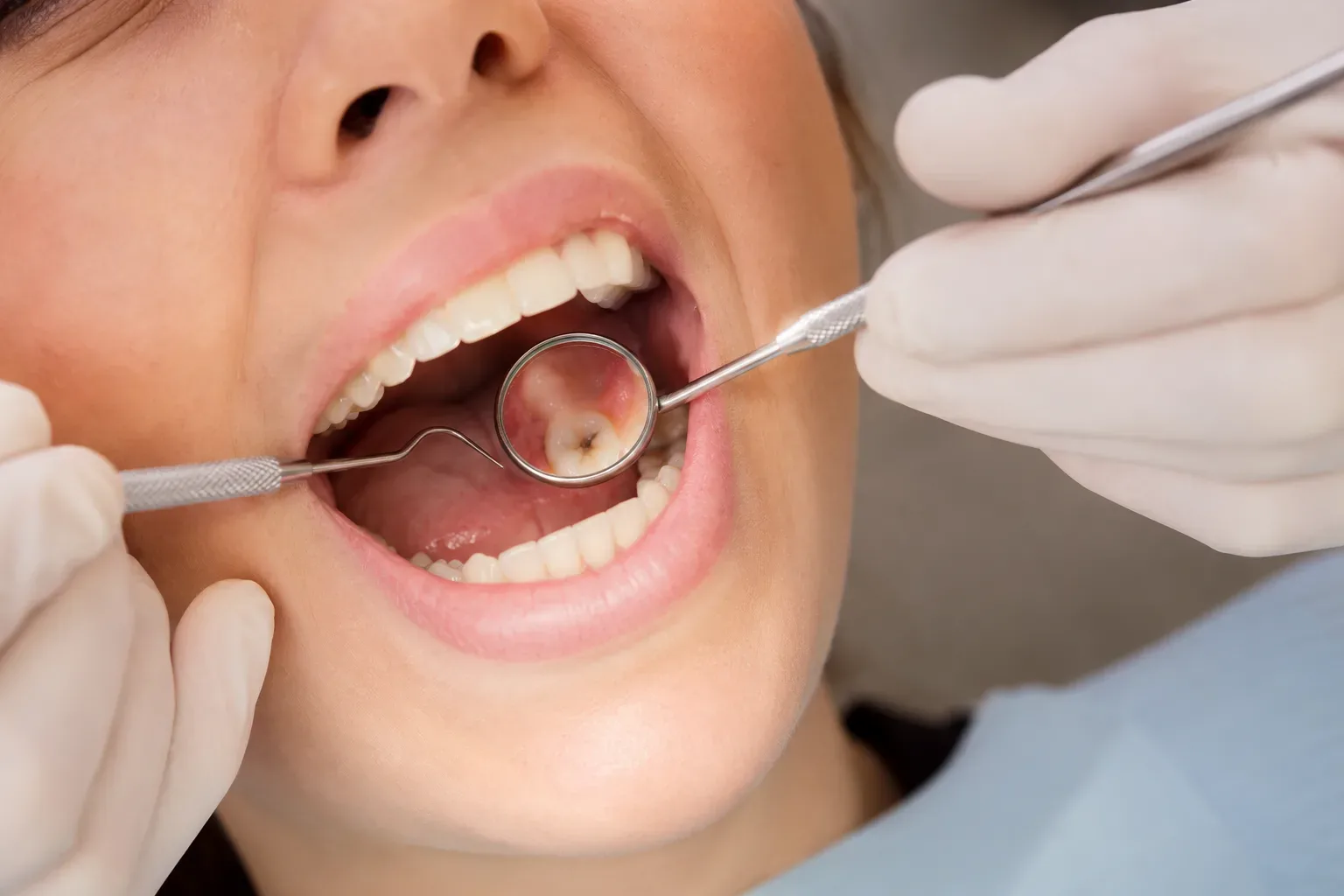
Tooth decay pain can result from decay on the tooth’s surface progressing deeper into the tooth over time. In the early stages, you may experience brief sensitivity to hot, cold, or sweet foods. As the decay approaches the nerve tissue of the tooth, you may experience spontaneous, prolonged, throbbing pain or pain that worsens while chewing.
Maintaining good oral hygiene, gently removing food particles stuck between the teeth, and applying a cold compress to the outside of the cheek may provide temporary relief. Avoiding extremely hot, cold, sugary, and hard foods while the pain persists can also help prevent increased sensitivity. However, these methods do not cure the cavity and can only provide temporary relief from pain.
Depending on the severity of the cavity, different toothache treatment options can be planned. While a filling may be sufficient for early-stage cavities, root canal treatment may be necessary if the tooth’s nerve is affected. In cases where the tooth is severely damaged and cannot be saved through treatment, other treatment options may be considered. The most appropriate approach should be determined following a detailed dental examination.
What Helps with Inflamed or Abscessed Tooth Pain?
Inflamed tooth pain and abscessed tooth pain can manifest with symptoms such as severe throbbing, swelling of the gums or face, sensitivity to hot and cold, fever, a bad taste in the mouth, and increased pain when biting down. A dental abscess can develop as a result of an infection in the tooth’s root or surrounding tissues. The pain may also spread to the ear, jaw, or neck area.
Tooth abscess pain cannot be completely treated at home. Cold compresses, maintaining good oral hygiene, and appropriate temporary pain management methods may alleviate symptoms for a while; however, they do not eliminate the source of the infection. Depending on the cause of the pain, procedures such as root canal treatment, drainage of the abscess, gum treatment, or tooth extraction may be planned. Antibiotics are not necessary for every case of toothache and should only be used following a dentist’s evaluation.
If there is rapidly increasing swelling in the face, around the eyes, or in the neck, a dental evaluation should not be delayed. If the swelling is accompanied by difficulty breathing, speaking, or swallowing, emergency medical care should be sought. To prevent the infection from spreading, it is important to treat the source of the toothache as soon as possible, rather than simply suppressing the pain.

What Helps Relieve Gum Pain?
The answer to the question “What helps with gum pain?” depends on the underlying cause of the pain. Gum pain can develop due to plaque and tartar buildup, gum inflammation, brushing too hard or incorrectly, food getting stuck between teeth, receding gums, or problems around wisdom teeth. The pain may be accompanied by redness, swelling, bleeding, bad breath, or sensitivity.
Gently cleaning your teeth with a soft-bristled toothbrush, carefully cleaning between your teeth with dental floss or an interdental brush, and rinsing your mouth with warm salt water can provide temporary relief. You should avoid vigorous brushing, which can irritate the area, as well as very hot or hard foods, and applying irritating substances directly to the gums.
If gum bleeding, redness, swelling, or pain does not subside within a few days, a dental examination is necessary. While gum diseases can be controlled in the early stages with professional cleaning and proper oral care, more comprehensive periodontal treatments may be required in advanced cases. Determining the cause of the pain is important both for maintaining gum health and for preventing the problem from progressing.
What Helps with Wisdom Tooth Pain?
Wisdom tooth pain can occur because the tooth cannot find enough space in the mouth, remains impacted or partially impacted, or only a portion of it has erupted. Food particles and bacteria can accumulate around a partially erupted wisdom tooth. This can cause gum sensitivity, redness, swelling, a bad taste, and pain while chewing.
Carefully cleaning the area with a soft-bristled toothbrush and rinsing your mouth with warm salt water may provide temporary relief. Avoiding chewing hard foods on the affected side and applying a cold compress to the outside of the cheek for short periods may also help reduce symptoms. However, these methods do not address the underlying cause of the infection around the wisdom tooth or the problem with the impacted tooth.
If the pain recurs, worsens over time, or is accompanied by swelling, fever, difficulty opening the mouth, or discomfort while swallowing, a dental examination should not be delayed. Following an examination and any necessary imaging, treatment options such as cleaning the area, controlling the infection, or extracting the wisdom tooth may be considered.
Why Does Tooth Pain Worsen at Night?
For some patients, tooth pain may feel more intense at night than during the day. When lying down, pressure and throbbing in the painful area may become more pronounced. Additionally, the reduction in environmental stimuli at night and the fact that the person is resting may cause their attention to focus more on the toothache.
Slightly elevating the head with one or two pillows while sleeping, avoiding chewing on the affected side, and applying a cold compress to the outer part of the cheek for short periods may provide temporary relief. Avoiding extremely hot, cold, sugary, and hard foods can also help reduce the likelihood of triggering pain. In appropriate patients, pain relievers should be used only in accordance with the package insert or as recommended by a doctor or pharmacist.
Tooth pain that subsides at night or goes away in the morning does not mean the underlying problem has been resolved. Recurring pain, pain that wakes you from sleep, or throbbing pain may be related to advanced tooth decay, damage to the tooth’s nerve, or an infection. If the pain persists or is accompanied by swelling, fever, a bad taste in the mouth, or sensitivity when biting, you should see a dentist.
What Should You Do If You Have a Broken Tooth?
If you experience pain from a broken tooth, gently rinse your mouth with lukewarm water and avoid chewing hard foods on the affected side. Applying a cold compress to the outside of your cheek for short periods may help temporarily reduce pain and swelling. Avoiding constant contact with the broken area using your tongue or fingers can also prevent further irritation of the tissues.
A broken tooth may not be merely an aesthetic problem. Depending on the depth of the fracture, the tooth’s nerve tissue may be affected, sensitivity to hot and cold may develop, or the risk of infection may increase. Especially if there is spontaneous, throbbing pain or pain that becomes more pronounced while chewing, a dental evaluation should not be delayed.
If a piece of the broken tooth can be found, it should be preserved in a clean container and brought to the dentist. Treatment can be planned using fillings, bonding, crowns, root canal therapy, or other restorative procedures, depending on the location and depth of the fracture. It is important to get examined as soon as possible to preserve the tooth as much as possible.
Why Does a Filled Tooth Hurt?
Pain in a tooth with a filling may manifest as short-term sensitivity to hot or cold temperatures or mild discomfort while chewing following the placement of a new filling. In some patients, this sensitivity may subside within a short time. However, if the pain persists, gradually worsens, or interferes with daily life, the filling and the tooth must be re-evaluated.
If the filling is too high, it can put excessive pressure on the tooth during chewing and cause pain. In addition, the development of new decay under the filling, a crack in the tooth, poor marginal fit of the filling, or irritation of the tooth’s nerve can also lead to pain. Pain that worsens at night, is throbbing, or starts spontaneously may be a sign of a more serious problem.
Treatment is planned based on the cause of the pain. A filling that is too high can be adjusted, an old or ill-fitting filling can be replaced, or root canal treatment may be considered if the tooth’s nerve is affected. Persistent pain in a tooth with a filling should not be simply masked with pain relievers; a dental examination is necessary for appropriate treatment of tooth pain.
What Should You Avoid When Experiencing Tooth Pain?
Aspirin, cologne, alcohol, garlic, or similar irritating substances should not be applied to the painful tooth. Such methods do not treat the source of the toothache; they can cause irritation, chemical burns, or increased sensitivity in the gums and oral tissues.
Do not apply heat to the swollen area on the face or gums. Do not take antibiotics without consulting a doctor, and do not take pain relievers in doses higher than recommended. Antibiotics are not necessary for every case of toothache and are not a substitute for dental treatment.
A temporary reduction in pain through medication or home remedies does not mean that the underlying problem has been resolved. Tooth decay, tooth nerve inflammation, an abscess, a cracked tooth, or a problem with a filling may still be present. Instead of trying to suppress the pain for a long time, you should see a dentist to determine the cause.
When Should You See a Dentist for Tooth Pain?
You should see a dentist if your toothache lasts longer than two days, is getting worse, or is affecting your daily life and sleep. Symptoms such as pain when biting, fever, a bad taste in the mouth, swelling of the gums or face, and difficulty opening the mouth also require evaluation.
Examination should not be delayed in cases of severe throbbing pain, pain that does not subside despite pain relievers, a broken tooth, a fallen filling, or rapidly increasing swelling. Early evaluation can help determine the source of the pain and plan appropriate treatment to preserve the tooth.
Severe and rapidly progressing swelling of the face, around the eyes, in the mouth, throat, or neck; or symptoms such as difficulty breathing, swallowing, or speaking require immediate evaluation. In such cases, you should seek care at the nearest emergency medical facility rather than waiting for a routine appointment.
How Is Toothache Treated?
Toothache treatment is planned based on the source of the pain. Therefore, not only the severity of the pain but also when it started, whether it worsens with hot or cold, whether it is felt while chewing, and whether there are additional symptoms such as swelling are evaluated. An oral examination and, when necessary, imaging methods may be used to make a definitive diagnosis.
In the early stages of tooth decay, a filling may be applied. If the decay has progressed to the point of affecting the tooth’s nerve, root canal treatment may be considered. For pain caused by gum disease, professional teeth cleaning and periodontal treatments may be planned. For broken or cracked teeth, depending on the extent of the fracture, options such as fillings, bonding, crowns, or other restorative procedures may be chosen.
Extraction may be necessary for teeth that are damaged beyond repair. In cases of abscesses, it is important to identify the source of the infection and eliminate it with appropriate treatment. While pain relievers may provide temporary relief, a permanent solution requires not just suppressing the pain but treating the underlying problem causing it.
Why Choose Vita Dental Clinic for Tooth Pain in Bursa?
For patients experiencing toothache, an accurate diagnosis is essential for planning appropriate treatment. This is because pain that feels similar can stem from various causes, such as cavities, pulpitis, gum disease, abscesses, broken teeth, high fillings, or wisdom tooth problems. For this reason, a detailed and personalized evaluation must be conducted before treatment.
At Vita Dental Clinic, Dr. Ahmet Başkaya evaluates the patient’s pain history, tooth and gum structure, existing fillings, and bite and chewing patterns. The source of the pain is determined by reviewing the necessary imaging results, and a toothache treatment plan tailored to the patient’s needs is developed.
Before and after their appointments, patients are provided with detailed information about treatment options, the procedures to be performed, the process, aftercare recommendations, and symptoms to watch for. This approach can help patients follow their treatment process more actively and ensure they have a safe and comfortable dental treatment experience.