
Wisdom tooth extraction is one of the most common dental procedures, particularly for patients experiencing pain, swelling, gum sensitivity, or problems with impacted teeth in the back of the jaw. While wisdom teeth erupt without any issues in some people, in others they may remain impacted or partially impacted due to insufficient space in the jaw. Over time, this can lead to pain, infection, pressure on adjacent teeth, and difficulty maintaining oral hygiene.
In this article, we address the most frequently asked questions—such as why wisdom tooth extraction is performed, how the procedure is carried out, what to watch out for after the extraction, and why choosing the right clinic for wisdom tooth extraction in Bursa is important—in a patient-centered manner. At Vita Oral and Dental Health Clinic, our goal is to create a safe, comfortable, and personalized treatment plan tailored to each patient’s oral anatomy and tooth position.
What Are Wisdom Teeth?
Wisdom teeth are the third molars located at the very back of the mouth and typically begin to erupt between the ages of 17 and 25. Commonly known as “wisdom teeth,” these teeth may erupt fully and without complications in some individuals, while in others, they may have difficulty erupting due to insufficient space in the jawbone.
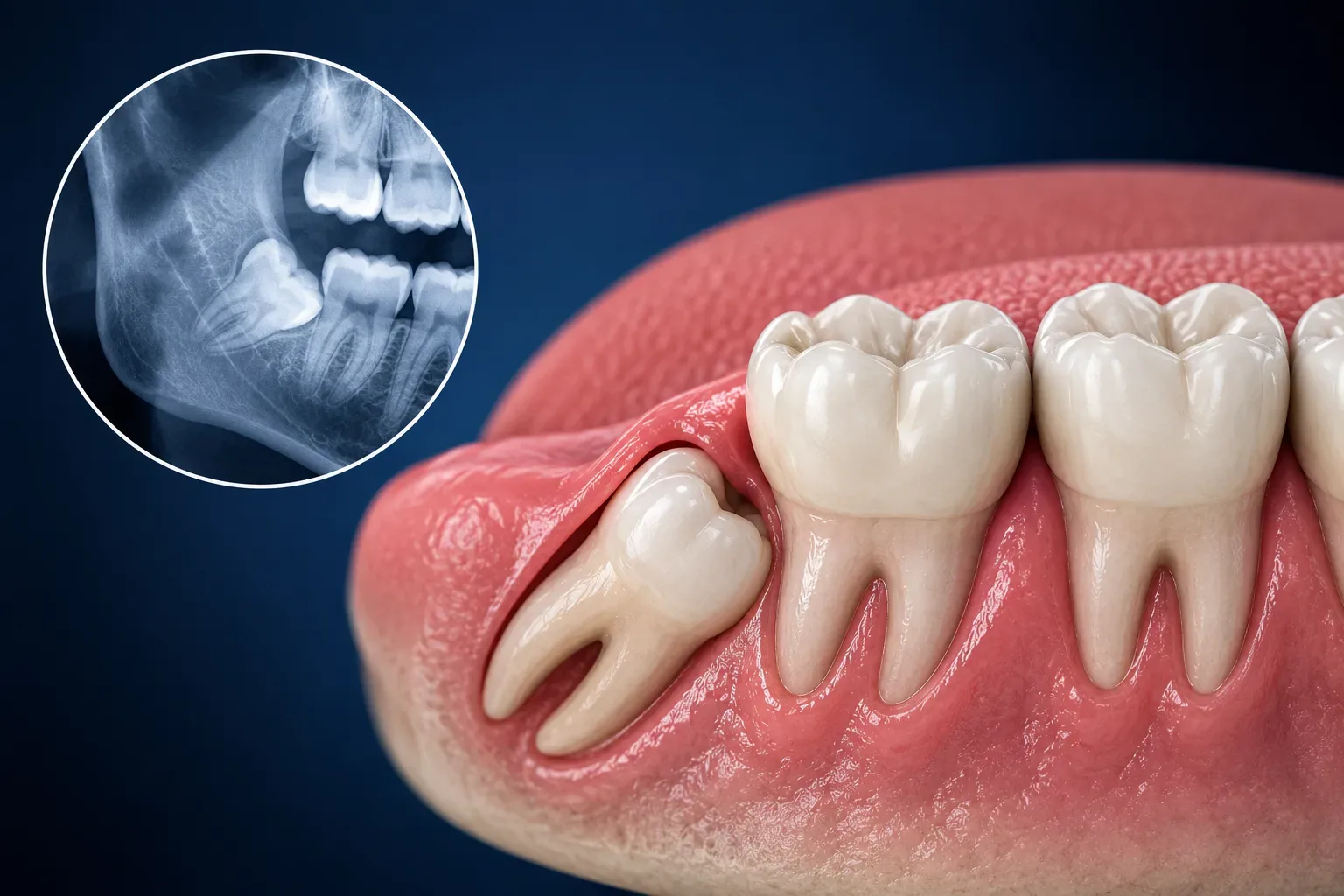
Not every patient has wisdom teeth, or these teeth may remain embedded in the jawbone without ever becoming visible in the mouth. In some cases, only part of the tooth emerges into the mouth; this is called a partially impacted wisdom tooth. Impacted or partially impacted teeth can eventually lead to problems such as pain, gum swelling, infection, or pressure on adjacent teeth.
For this reason, the condition of wisdom teeth should be evaluated not only when pain begins but also during regular dental checkups. Using imaging methods such as panoramic X-rays, the tooth’s position, root structure, and relationship with surrounding tissues are examined, and a decision regarding monitoring or extraction is made on a case-by-case basis.
Why Are Wisdom Teeth Extracted?
Wisdom tooth extraction is planned in cases where the tooth negatively affects oral health or poses a risk of future problems. In particular, complaints such as impacted wisdom teeth, partially impacted teeth, recurrent infections, gum swelling, jaw pain, and pressure on adjacent teeth may indicate the need for extraction.
Since wisdom teeth are located in the very back of the mouth, they are more difficult to clean than other teeth. This can lead to problems such as tooth decay, gum inflammation, a bad taste in the mouth, or bad breath. In partially impacted teeth, bacteria can accumulate more easily between the gum and the tooth, which can lead to recurring painful infections.
In some patients, wisdom teeth may press against an adjacent molar, causing pain, crowding, or an increased risk of decay and root damage to the adjacent tooth. In such cases, the dentist will develop the most appropriate treatment plan for wisdom tooth extraction following a clinical examination and X-ray evaluation.
What Are the Symptoms of Wisdom Tooth Pain?
Wisdom tooth pain usually begins as pressure, tenderness, or throbbing felt in the very back of the jaw. Swelling, redness, and tenderness upon touch may be observed in the area where the tooth is trying to erupt. In some patients, the pain becomes more pronounced while eating, chewing, or opening and closing the mouth.
In partially impacted wisdom teeth, bacterial buildup around the gums can lead to a bad taste, bad breath, or a sensation of inflammation. As the infection progresses, swelling in the area may increase, the patient may have difficulty opening their mouth, and jaw movement may be restricted. These symptoms indicate that the wisdom tooth must be evaluated by a dentist.
In some cases, wisdom tooth pain may be felt not only in the tooth area but also in the head, ear, jaw joint, or throat. This referred pain may lead the patient to believe the problem is in a different area. Therefore, an early examination is important if there is recurring pain behind the jaw, swelling, or difficulty opening the mouth.
How Is an Impacted Wisdom Tooth Extracted?
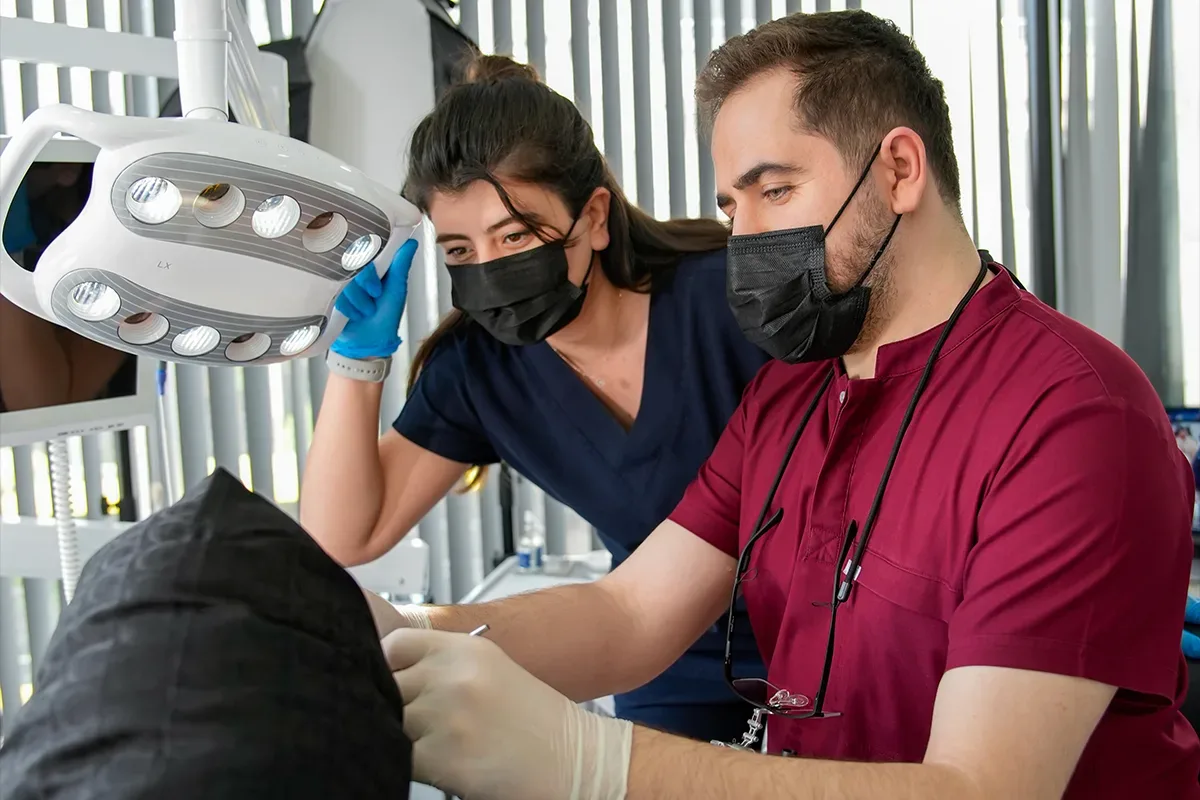
The extraction of an impacted wisdom tooth is first planned through a detailed dental examination and imaging. A panoramic X-ray is used to assess the tooth’s position within the jawbone, its root structure, its relationship to adjacent teeth, and its proximity to nerve tissues. In some cases where deemed necessary, more detailed imaging methods may also be used.
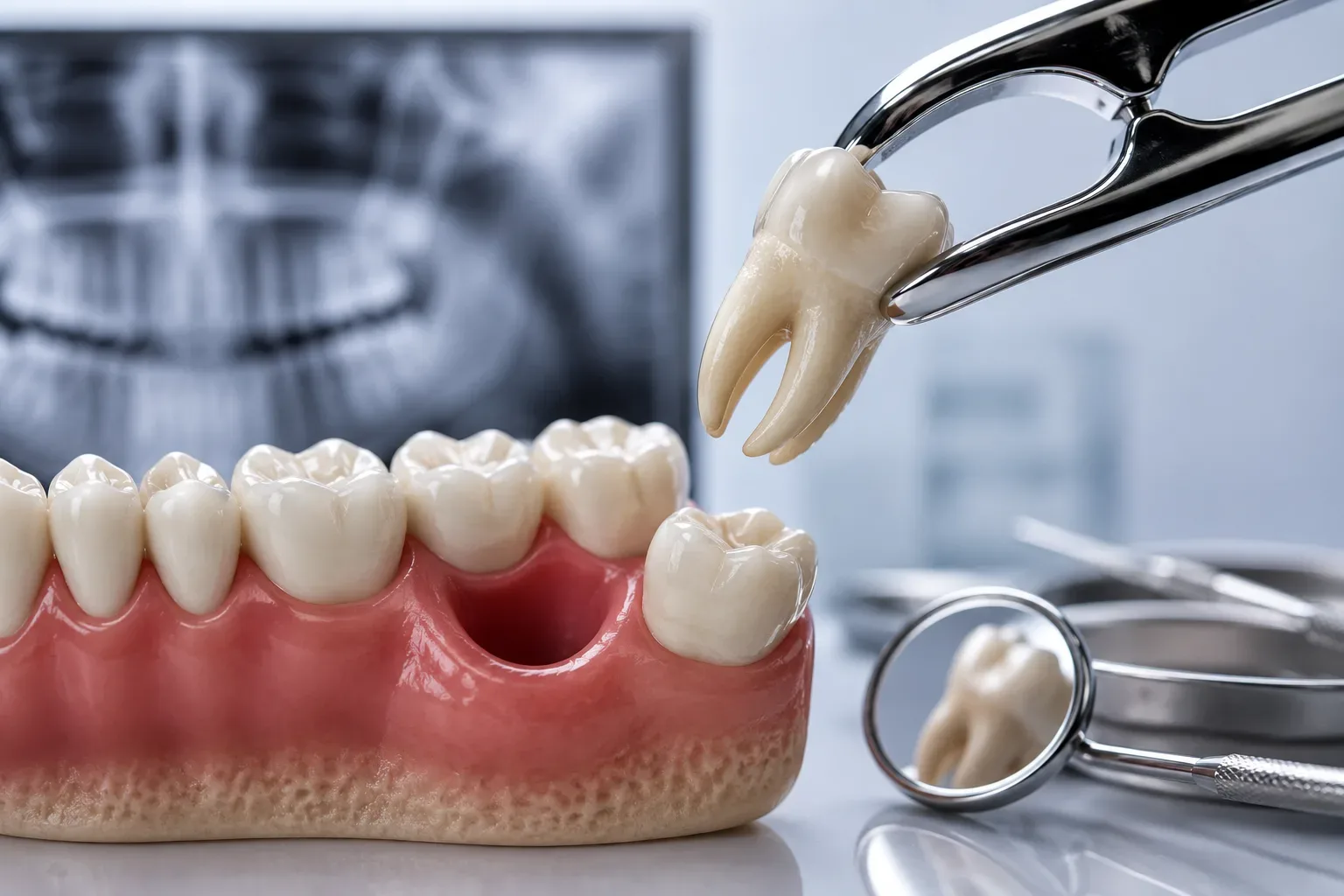
The procedure is typically performed under local anesthesia. This ensures that the patient feels no pain during the extraction; they may only feel pressure or movement. Depending on the tooth’s position, the gum may be opened with a small surgical incision; if necessary, the tooth may be sectioned into pieces for a more controlled extraction. This approach helps protect surrounding tissues and ensures the procedure proceeds more safely.
After the tooth is extracted, the area is cleaned, and stitches are applied if necessary. The dentist explains in detail to the patient what to watch for after the procedure, how to take any prescribed medications, and the follow-up schedule. The extraction of an impacted wisdom tooth is a procedure tailored to the individual; therefore, the recovery process may vary depending on the tooth’s position, the difficulty of the procedure, and the patient’s overall oral health.
What Should You Consider Before a Wisdom Tooth Extraction?
The most important step before a wisdom tooth extraction is ensuring that the dentist has accurate information about the patient’s general health and oral structure. Any medications taken regularly, chronic illnesses, previous surgeries, and current health issues must be reported to the dentist. This information helps ensure the extraction is planned safely.
In particular, patients taking blood-thinning medications must inform their dentist of this before the procedure. Similarly, if the patient has heart disease, diabetes, high blood pressure, immune system disorders, or is taking regular medications, the treatment plan can be adjusted accordingly. Pregnancy or the possibility of pregnancy must also be disclosed before the extraction.
If you have previously experienced an allergic reaction to local anesthesia, antibiotics, pain relievers, or any other medication, this information is also important for the dentist. Before the procedure, the extraction site is evaluated via X-ray, the tooth’s position is examined, and the patient is provided with detailed information about the process. This allows for a more controlled, safe, and comfortable wisdom tooth extraction for the patient.
Recovery Process After Wisdom Tooth Extraction
The recovery process following a wisdom tooth extraction may vary depending on whether the tooth is impacted, whether the extraction required surgery, and the patient’s overall oral health. While recovery may be faster after simple extractions, extra sensitivity may persist for a few more days following the extraction of an impacted or surgically removed wisdom tooth. Following the dentist’s recommendations during this time supports the healing process.
The first 24 hours are crucial for maintaining the blood clot at the extraction site. During this period, mild pain, swelling, oozing of blood, and sensitivity are considered normal. Any pain relievers, antibiotics, or oral care instructions recommended by the dentist should be followed regularly. Instead of using medication without supervision, the dentist’s recommendations must be strictly followed.
Swelling is usually more pronounced in the first few days and begins to subside over time. The patient’s refusal to smoke, avoiding putting pressure on the extraction site, avoiding hard foods, and maintaining good oral hygiene positively affect the healing process. In cases of severe pain, prolonged bleeding, foul odor, fever, or increasing swelling, you should contact your dentist immediately.

What Should You Pay Attention to After a Wisdom Tooth Extraction?
The most important thing to keep in mind after a wisdom tooth extraction is to protect the blood clot that forms at the extraction site. This clot helps ensure that the healing process begins properly. For this reason, it is not recommended to spit, rinse your mouth vigorously, use a straw, or touch the extraction site with your tongue during the first few hours after the procedure.
You should avoid hot foods and beverages for the first 24 hours. Very hot foods can increase bleeding and negatively affect sensitivity in the extraction site. Similarly, smoking can slow down the healing process and increase the risk of infection. For this reason, it is important to avoid smoking, especially during the first few days.
After the extraction, you should avoid hard, crusty, or grainy foods, as well as any foods that might get lodged in the extraction site. The patient should avoid chewing on the side where the extraction took place as much as possible and should not put pressure on the area. Medications prescribed by the dentist should be taken regularly, oral hygiene should be maintained, and any follow-up appointments should not be missed.
What to Eat After a Wisdom Tooth Extraction?
Diet after a wisdom tooth extraction is one of the key factors that directly affects the healing process. On the first day, soft, warm, and easy-to-eat foods should be preferred. Eating is not recommended until the numbness has completely worn off, as the patient may bite their cheek, lip, or tongue without realizing it.
In the first few days, easily chewable foods such as yogurt, purees, warm soup, smoothies, soft pasta, pudding, and mashed vegetables can be chosen. Care should be taken to ensure that soups are not too hot. Additionally, the side where the extraction was performed should be avoided as much as possible during meals; bites should be taken in small portions, and the area should not be strained.
Avoiding very hot, spicy, acidic, hard, shelled, and grainy foods for a while will support healing. Small-piece foods such as chips, nuts, seeds, and rice are not recommended, as they can get lodged in the extraction site. If the dentist has provided specific dietary recommendations, the patient should follow these instructions based on their own healing progress.
What Factors Affect the Cost of a Wisdom Tooth Extraction?
The cost of a wisdom tooth extraction varies from patient to patient because the treatment plan depends on the tooth’s position, the patient’s oral anatomy, and the difficulty of the extraction. Whether the tooth is fully erupted, partially impacted, or fully impacted within the jawbone is one of the key factors affecting the price. A simple extraction and a surgical extraction of an impacted tooth are not the same procedure.
Other important factors affecting the cost include the tooth’s position, root structure, relationship to adjacent teeth, whether a surgical incision is required for the extraction, and the duration of the procedure. While a panoramic X-ray may be sufficient for some patients, more detailed imaging may be required in certain cases. These evaluations are important for both the safety of the procedure and accurate pricing.
Therefore, to obtain accurate information about the cost of a wisdom tooth extraction, a dental examination and imaging must first be performed. Once the condition of the tooth has been assessed, a personalized treatment plan is created for the patient, and pricing information is provided based on the scope of the procedure. The most appropriate approach is to consider not only the price but also the dentist’s experience, the clinic’s facilities, and the safe planning of the treatment process.
Vita Oral and Dental Health Clinic for Wisdom Tooth Extraction in Bursa
When planning a wisdom tooth extraction in Bursa, it is important to evaluate the procedure through a detailed examination and accurate imaging. At Vita Oral and Dental Health Clinic, a personalized treatment plan is created by taking into account the patient’s symptoms, oral structure, tooth position, and overall health. This allows for a clearer determination of whether a simple or surgical extraction is needed.
The Private Vita Oral and Dental Health Clinic in Bursa offers services in the fields of implant treatments, cosmetic dentistry, prosthetic treatments, and surgical dental procedures using a modern approach to dentistry. Before a wisdom tooth extraction, the tooth’s position is assessed using a panoramic X-ray and other necessary evaluations; the procedure is explained to the patient in a way that is easy to understand and reassuring.
At Vita, the goal is not merely to extract the problematic wisdom tooth, but to provide a comfortable and safe treatment process that preserves the patient’s overall oral health. Patients in Bursa experiencing wisdom tooth pain, impacted teeth, swollen gums, or a sensation of pressure behind the jaw can receive a detailed evaluation to learn about the treatment option best suited for them.